

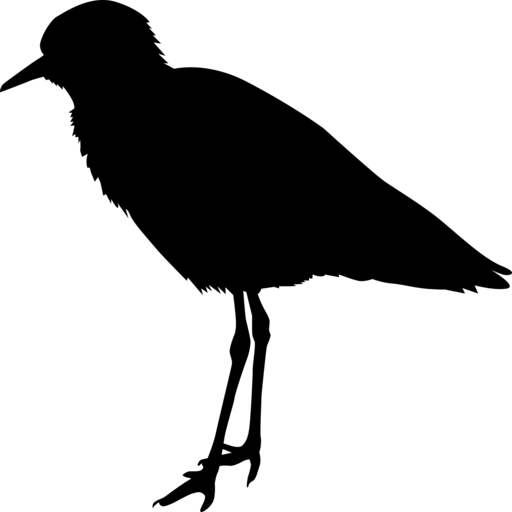
Masked Lapwing
Vanellus miles
Silhouette: Rebecca Groom · PhyloPic
- KingdomAnimalia (Animals)
- PhylumChordata (Chordates)
- ClassAves (Birds)
- OrderCharadriiformes (Shorebirds and Allies)
- FamilyCharadriidae (Plovers and Lapwings)
- GenusVanellus (Lapwings)
- SpeciesVanellus miles (Masked Lapwing)
About the Masked Lapwing
The masked lapwing (Vanellus miles) is a large, common and conspicuous bird native to Australia (particularly the northern and eastern parts of the continent), New Zealand and New Guinea. It spends most of its time on the ground searching for food such as insects and worms and has several distinctive calls. It is common in Australian fields, open land and where there is lots of water, and is known for its defensive swooping behaviour during the nesting season.
Despite the species being also known as the masked plover and often called the spur-winged plover or just plover in its native range, lapwings are classified to their own subfamily, Vanellinae, and not to the closely related plover subfamily, Charadriinae. There are two subspecies, the nominate subspecies and the southern V. m. novaehollandiae. The latter has distinctive black markings on the shoulder and side of the chest, and is sometimes recognised as a separate species, the black-shouldered lapwing (Vanellus novaehollandiae).
The masked lapwing was described by the French polymath Georges-Louis Leclerc, Comte de Buffon, in his Histoire Naturelle des Oiseaux in 1781. The bird was also illustrated in a hand-coloured... Wikipedia →
Recent sightings of Masked Lapwing in Grampians National Park
LIVEiNaturalistClosest Relatives at Grampians National Park

 Banded Lapwing
Vanellus tricolor

 Red-kneed Dotterel
Erythrogonys cinctus

 Silver Gull
Chroicocephalus novaehollandiae

 Bush Stone-curlew
Burhinus grallarius

 White-headed Stilt
Himantopus leucocephalus

 Whiskered Tern
Chlidonias hybrida

 Latham's Snipe
Gallinago hardwickii

 Sharp-tailed Sandpiper
Calidris acuminata

 Painted Buttonquail
Turnix varius

Red-necked Stint
Calidris ruficollis

 Banded Stilt
Cladorhynchus leucocephalus

 Caspian Tern
Hydroprogne caspia
Global Distribution
Warmer areas are where this animal is recorded most often.
Parks Where Found
Quick answers
What are the chances of seeing a Masked Lapwing in Grampians National Park?
About 30% of wildlife watchers report a Masked Lapwing sighting in Grampians National Park, based on 246 verified sightings from GBIF citizen-science data.
When is the best time to see Masked Lapwing in Grampians National Park?
February has the highest sighting rate for Masked Lapwing in Grampians National Park in our monthly data.