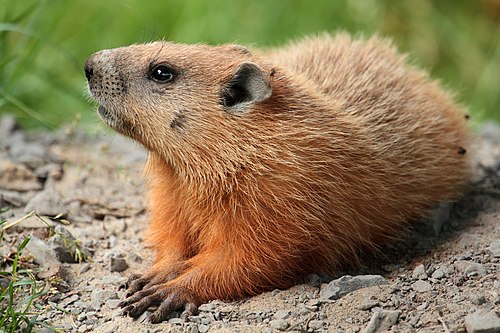



Woodchuck
Marmota monax
Silhouette: T. Michael Keesey · PhyloPic
- KingdomAnimalia (Animals)
- PhylumChordata (Chordates)
- ClassMammalia (Mammals)
- OrderRodentia (Rodents)
- FamilySciuridae (Squirrels)
- GenusMarmota (Marmots)
- SpeciesMarmota monax (Woodchuck)
About the Woodchuck
The groundhog (Marmota monax), also known as the woodchuck, is a rodent of the family Sciuridae, belonging to the group of large ground squirrels known as marmots. A lowland creature of North America, it is found through much of the Eastern United States, across Canada and into Alaska.
It was given its scientific name as Mus monax by Carl Linnaeus in 1758, based on a description of the animal by George Edwards, published in 1743. The groundhog, being a lowland animal, is exceptional among marmots. Other marmots, such as the yellow-bellied and hoary marmots, live in rocky and mountainous areas. Groundhogs are considered one of the most solitary of marmot species. They live in aggregations, and their social organization and long-term pair bonds varies across populations. The groundhog's male and female interactions are usually limited to the mating season and copulation. However, certain populations of groundhogs have been observed to form long-term adult male-female association throughout the year, and often from year to year.
The groundhog is an important contributor to the maintenance of healthy soil in woodlands and plains; as such, the species is considered a crucial habitat engineer. The groundhog is an extremely intelligent animal, forming complex social networks and kinship with its young; it is capable of understanding social behavior, communicating threats through whistling, and working cooperatively to accomplish tasks such as burrowing. Wikipedia →
Recent sightings of Woodchuck in Great Bear Rainforest
LIVEiNaturalistClosest Relatives at Great Bear Rainforest

 Hoary Marmot
Marmota caligata

 American Red Squirrel
Tamiasciurus hudsonicus

 Northern Flying Squirrel
Glaucomys sabrinus

Douglas' Squirrel
Tamiasciurus douglasii

 Yellow-pine Chipmunk
Tamias amoenus

Least Chipmunk
Tamias minimus

 Columbian Ground Squirrel
Urocitellus columbianus

 American Beaver
Castor canadensis
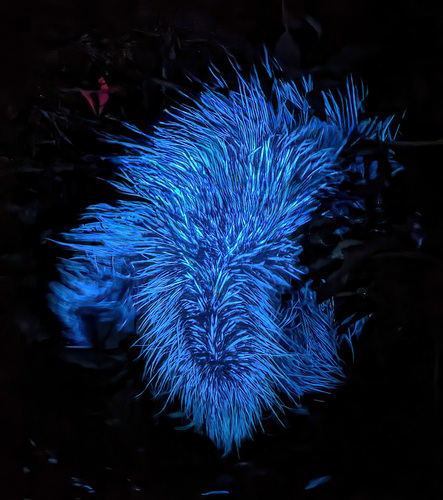
 Quiller
Erethizon dorsatus

 Muskrat
Ondatra zibethicus
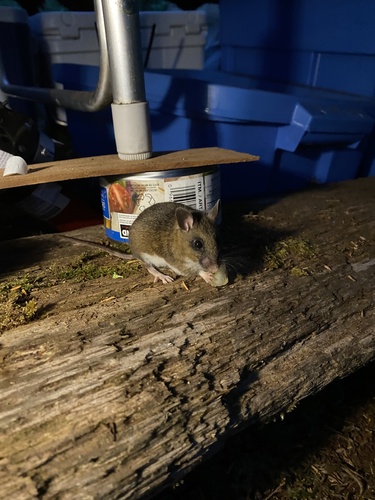
 Northwestern Deermouse
Peromyscus keeni

Deer Mouse
Peromyscus maniculatus
Global Distribution
Warmer areas are where this animal is recorded most often.
Parks Where Found
| # | Park | Country | Daily sighting probability |
|---|---|---|---|
| 1 | Shenandoah National Park | 🇺🇸 United States | |
| 2 | Acadia National Park | 🇺🇸 United States | |
| 3 | Wood Buffalo National Park | 🇨🇦 Canada | |
| 4 | Isle Royale National Park | 🇺🇸 United States | |
| 5 | Point Pelee National Park | 🇨🇦 Canada |
Quick answers
What are the chances of seeing a Woodchuck in Great Bear Rainforest?
About 10% of wildlife watchers report a Woodchuck sighting in Great Bear Rainforest, based on 15 verified sightings from GBIF citizen-science data.
When is the best time to see Woodchuck in Great Bear Rainforest?
August has the highest sighting rate for Woodchuck in Great Bear Rainforest in our monthly data.