



House Crow
Corvus splendens
Silhouette: Andy Wilson · PhyloPic
- KingdomAnimalia (Animals)
- PhylumChordata (Chordates)
- ClassAves (Birds)
- OrderPasseriformes (Perching Birds)
- FamilyCorvidae (Crows, Jays, and Magpies)
- GenusCorvus (Crows and Ravens)
- SpeciesCorvus splendens (House Crow)
About the House Crow
The house crow (Corvus splendens), also known as the Indian, greynecked, Ceylon or Colombo crow, is a common bird of the crow family that is of Asian origin but now found in many parts of the world, where they arrived assisted by shipping. It is between the jackdaw and the carrion crow in size (40 cm (16 in) in length) but is slimmer than either. The forehead, crown, throat and upper breast are a richly glossed black, whilst the neck and breast are a lighter grey-brown in colour. The wings, tail and legs are black. There are regional variations in the thickness of the bill and the depth of colour in areas of the plumage.
The house crow was formally described in 1817 as Corvus splendens by the French ornithologist Louis Vieillot based on a specimen collected in Bengal. The specific epithet is from Latin splendens, splendentis meaning "brilliant" or "glittering".
The nominate race C. s. splendens is found in Pakistan, India, Nepal and Bangladesh and has a grey neck collar. The subspecies C. s. zugmayeri is found in the dry parts of South Asia and Iran and has a very pale neck collar. The subspecies C. s. protegatus is found in southern India, the Maldives (sometimes separated... Wikipedia →
Recent sightings of House Crow in Horton Plains National Park
LIVEiNaturalistClosest Relatives at Horton Plains National Park

 Large-billed Crow
Corvus macrorhynchos

 Ceylon Magpie
Urocissa ornata

 Sri Lanka White-eye
Zosterops ceylonensis

 Pied Bushchat
Saxicola caprata

 Yellow-eared Bulbul
Pycnonotus penicillatus

 Hill Swallow
Hirundo domicola

 Dull-blue Flycatcher
Eumyias sordidus

 Cinereous Tit
Parus cinereus
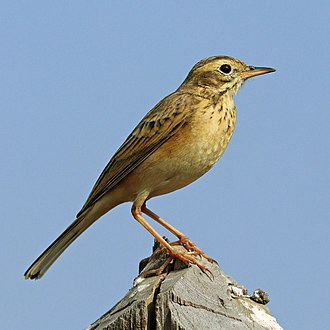
 Oriental Pipit
Anthus rufulus

 Indian Blackbird
Turdus simillimus

 Zitting Cisticola
Cisticola juncidis

Sri Lanka Bush-Warbler
Elaphrornis palliseri
Global Distribution
Warmer areas are where this animal is recorded most often.
Parks Where Found
Quick answers
What are the chances of seeing a House Crow in Horton Plains National Park?
About 10% of wildlife watchers report a House Crow sighting in Horton Plains National Park, based on 38 verified sightings from GBIF citizen-science data.
When is the best time to see House Crow in Horton Plains National Park?
March has the highest sighting rate for House Crow in Horton Plains National Park in our monthly data.