


Tricolored Munia
Lonchura malacca
Silhouette: Ferran Sayol · PhyloPic
- KingdomAnimalia (Animals)
- PhylumChordata (Chordates)
- ClassAves (Birds)
- OrderPasseriformes (Perching Birds)
- FamilyEstrildidae (Waxbills and Allies)
- GenusLonchura (Typical Munias and Mannikins)
- SpeciesLonchura malacca (Tricolored Munia)
About the Tricolored Munia
The tricoloured munia (Lonchura malacca) is an estrildid finch, native to Bangladesh, India, Sri Lanka, Pakistan, and southern China. The species has also been introduced to the Caribbean, in Trinidad, Jamaica, Hispaniola, Puerto Rico, Cuba, and Venezuela. This species, like the chestnut munia has been known as the black-headed munia. Immature birds have pale brown upperparts, lack the dark head found in adults, and have uniform buff underparts that can be confused with immatures of other munias such as the scaly-breasted munia.
The tricolored munia was formally described by the Swedish naturalist Carl Linnaeus in 1766 in the twelfth edition of his Systema Naturae under the binomial name Loxia malacca. Linnaeus mistakenly specified the locality as China, Java and Malacca. This was corrected by E. C. Stuart Baker in 1926 as Belgaum in the state of Karnataka in southwest India. The specific epithet malacca is a geographical misnomer; the species does not occur on the Malay Peninsula. The tricolored munia is now placed in the genus Lonchura that was introduced by the English naturalist William Henry Sykes in 1832. This species was formerly treated as conspecific with the... Wikipedia →
Recent sightings of Tricolored Munia in Horton Plains National Park
LIVEiNaturalistClosest Relatives at Horton Plains National Park

 Black-throated Munia
Lonchura kelaarti

 Nutmeg Mannikin
Lonchura punctulata

White-rumped Munia
Lonchura striata

 Indian Silverbill
Euodice malabarica

 Sri Lanka White-eye
Zosterops ceylonensis

 Pied Bushchat
Saxicola caprata

 Yellow-eared Bulbul
Pycnonotus penicillatus

 Hill Swallow
Hirundo domicola

 Dull-blue Flycatcher
Eumyias sordidus

 Large-billed Crow
Corvus macrorhynchos

 Cinereous Tit
Parus cinereus
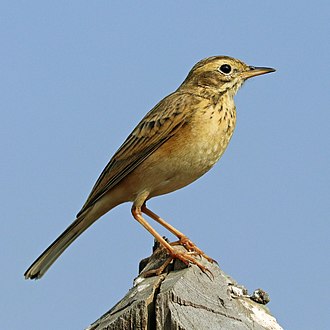
 Oriental Pipit
Anthus rufulus
Global Distribution
Warmer areas are where this animal is recorded most often.
Parks Where Found
Quick answers
What are the chances of seeing a Tricolored Munia in Horton Plains National Park?
About 50% of wildlife watchers report a Tricolored Munia sighting in Horton Plains National Park, based on 297 verified sightings from GBIF citizen-science data.
When is the best time to see Tricolored Munia in Horton Plains National Park?
August has the highest sighting rate for Tricolored Munia in Horton Plains National Park in our monthly data.