


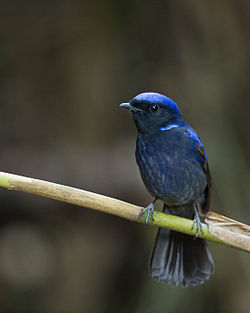

Large Niltava
Niltava grandis
Silhouette: Martin Bulla, based on François Desbordes' illustration · PhyloPic
- KingdomAnimalia (Animals)
- PhylumChordata (Chordates)
- ClassAves (Birds)
- OrderPasseriformes (Perching Birds)
- FamilyMuscicapidae (Old World Flycatchers, Robins, and Chats)
- GenusNiltava (Niltavas)
- SpeciesNiltava grandis (Large Niltava)
About the Large Niltava
The large niltava (Niltava grandis) is a species of bird in the Old world flycatcher family Muscicapidae. It is found in Bangladesh, Bhutan, Cambodia, China, India, Indonesia, Laos, Malaysia, Myanmar, Nepal, Thailand and Vietnam. Its natural habitat is subtropical or tropical montane forests.
The large niltava was formally described in 1842 by the English zoologist Edward Blyth based on specimens collected in Darjeeling, India. He coined the binomial name Chaïtaris grandis. The large niltava is now placed with six other niltavas in the genus Niltava that was introduced in 1837 by the English naturalist Brian Hodgson.
Four subspecies are recognised: N. g. grandis (Blyth, 1842) – east Himalayas to southwest China, central Myanmar and north, west Thailand N. g. griseiventris La Touche, 1921 – south China and north Indochina N. g. decorata Robinson & Kloss, 1919 – central south Vietnam
N. g. decipiens Salvadori, 1891 – montane Malay Peninsula and Sumatra Image at ADW Wikipedia →
Recent sightings of Large Niltava in Kerinci Seblat National Park
LIVEiNaturalistClosest Relatives at Kerinci Seblat National Park
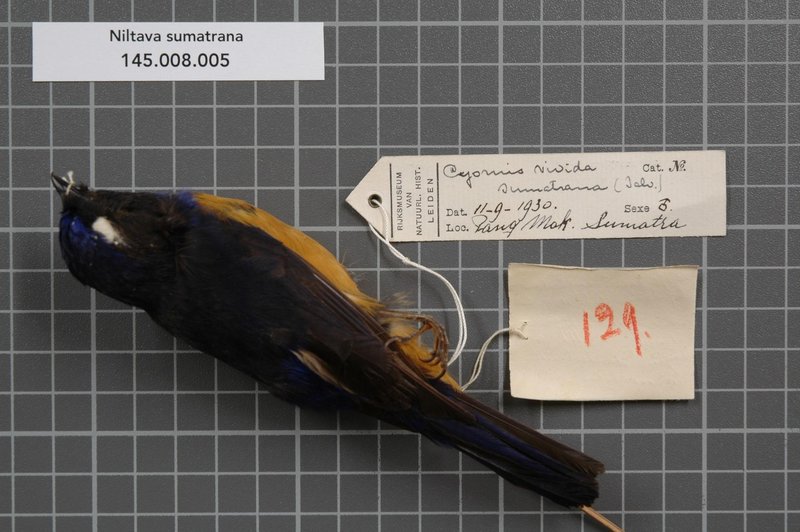
 Rufous-vented Niltava
Niltava sumatrana

Shiny Whistling-Thrush
Myophonus melanurus

 Snowy-browed Flycatcher
Ficedula hyperythra

 Sunda Forktail
Enicurus velatus

Lesser Shortwing
Brachypteryx leucophris

Indigo Flycatcher
Eumyias indigo

Chestnut-winged Whistling-Thrush
Myophonus castaneus

Blue Whistling-Thrush
Myophonus caeruleus
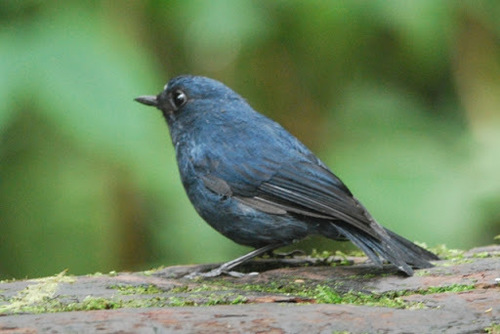
Sumatran Robin
Myiomela sumatrana

Verditer Flycatcher
Eumyias thalassinus

Fulvous-chested Jungle Flycatcher
Rhinomyias olivaceus

 Malaysian Blue-Flycatcher
Cyornis turcosus
Global Distribution
Warmer areas are where this animal is recorded most often.
Parks Where Found
| # | Park | Country | Daily sighting probability |
|---|---|---|---|
| 1 | Doi Inthanon National Park | 🇹🇭 Thailand | |
| 2 | Kerinci Seblat National Park | 🇮🇩 Indonesia | |
| 3 | Khangchendzonga National Park | 🇮🇳 India | |
| 4 | Namdapha National Park | 🇮🇳 India | |
| 5 | Royal Manas National Park | 🇧🇹 Bhutan | |
| 6 | Gunung Leuser National Park | 🇮🇩 Indonesia | |
| 7 | Manas National Park | 🇮🇳 India | |
| 8 | Langtang National Park | 🇳🇵 Nepal | |
| 9 | Cuc Phuong National Park | 🇻🇳 Vietnam | |
| 10 | Kaziranga National Park | 🇮🇳 India |
Quick answers
What are the chances of seeing a Large Niltava in Kerinci Seblat National Park?
About 30% of wildlife watchers report a Large Niltava sighting in Kerinci Seblat National Park, based on 248 verified sightings from GBIF citizen-science data.
When is the best time to see Large Niltava in Kerinci Seblat National Park?
May has the highest sighting rate for Large Niltava in Kerinci Seblat National Park in our monthly data.