


Eastern Yellow Wagtail
Motacilla tschutschensis
Silhouette: Martin Bulla, based on Ren Hathway's illustration · PhyloPic
- KingdomAnimalia (Animals)
- PhylumChordata (Chordates)
- ClassAves (Birds)
- OrderPasseriformes (Perching Birds)
- FamilyMotacillidae (Wagtails and Pipits)
- GenusMotacilla (Wagtails)
- SpeciesMotacilla tschutschensis (Eastern Yellow Wagtail)
About the Eastern Yellow Wagtail
The eastern yellow wagtail (Motacilla tschutschensis) is a small passerine in the wagtail family Motacillidae, which also includes the pipits and longclaws. It was formerly usually classified as a subspecies of the western yellow wagtail, but was split from it in 2003 when genetic data showed this classification to be paraphyletic with respect to the citrine wagtail. It breeds in the eastern Palearctic and Alaska and migrates to South Asia and Australia.
The eastern yellow wagtail was formally described in 1789 by the German naturalist Johann Friedrich Gmelin in his revised and expanded edition of Carl Linnaeus's Systema Naturae. He placed it with the wagtails in the genus Motacilla and coined the binomial name Motacilla tschutschensis. The specific epithet tschutschensis is from the locality, the Chukchi Peninsula is eastern Russia. Gmelin based his account on the "Tchutschi wagtail" that had been described by John Latham in 1783 and by Thomas Pennant in 1785. In his description Pennant wrote "Taken off the Tchutschi coat, with the Streights of Bering, Lat. 66, north". This is almost certainly the bird captured in 1778 during James Cook's third voyage to the Pacific... Wikipedia →
Recent sightings of Eastern Yellow Wagtail in Kinabatangan Wildlife Sanctuary
LIVEiNaturalistClosest Relatives at Kinabatangan Wildlife Sanctuary

 Grey Wagtail
Motacilla cinerea

White Wagtail
Motacilla alba

 Slender-billed Crow
Corvus enca

 Black-and-red Broadbill
Cymbirhynchus macrorhynchos

 Javan Myna
Acridotheres javanicus

Ashy Tailorbird
Orthotomus ruficeps

 Malaysian Pied-Fantail
Rhipidura javanica

 White-crowned Shama
Copsychus stricklandii
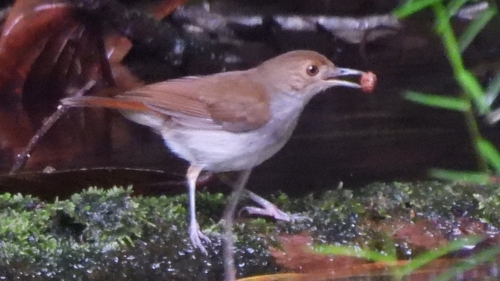
 White-chested Babbler
Trichastoma rostratum

Black-and-yellow Broadbill
Eurylaimus ochromalus

 Malaysian Blue-Flycatcher
Cyornis turcosus

 Hooded Pitta
Pitta sordida
Global Distribution
Warmer areas are where this animal is recorded most often.
Parks Where Found
Quick answers
What are the chances of seeing a Eastern Yellow Wagtail in Kinabatangan Wildlife Sanctuary?
Under 5% of wildlife watchers report a Eastern Yellow Wagtail sighting in Kinabatangan Wildlife Sanctuary, based on 8 verified sightings from GBIF citizen-science data.
When is the best time to see Eastern Yellow Wagtail in Kinabatangan Wildlife Sanctuary?
October has the highest sighting rate for Eastern Yellow Wagtail in Kinabatangan Wildlife Sanctuary in our monthly data.