
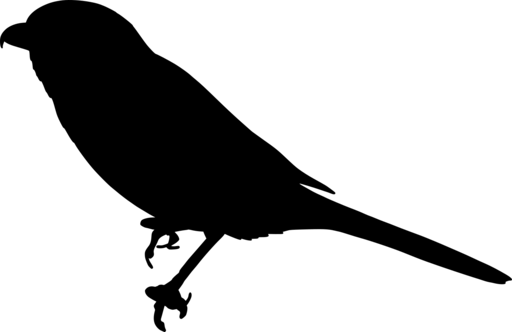
Tiger Shrike
Lanius tigrinus
Silhouette: Andy Wilson · PhyloPic
- KingdomAnimalia (Animals)
- PhylumChordata (Chordates)
- ClassAves (Birds)
- OrderPasseriformes (Perching Birds)
- FamilyLaniidae (Shrikes)
- GenusLanius (Typical Shrikes)
- SpeciesLanius tigrinus (Tiger Shrike)
About the Tiger Shrike
The tiger shrike or thick-billed shrike (Lanius tigrinus) is a small passerine bird which belongs to the genus Lanius in the shrike family, Laniidae. It is found in wooded habitats across eastern Asia. It is a shy, often solitary bird which is less conspicuous than most other shrikes. Like other shrikes it is predatory, feeding on small animals. Its nest is built in a tree and three to six eggs are laid.
It derives its name from the tiger-like pattern of its upperparts which are reddish-brown with dark bars. Adult males have white underparts and a grey head with a black mask. Females and young birds are duller and browner and young birds lack the grey and black on the head.
The tiger shrike was first described in 1822 by the Belgian naturalist Pierre Auguste Joseph Drapiez in the Dictionnaire classique d'histoire naturelle. He placed it in the genus Lanius, a group of about 26 species living in open areas across Eurasia, Africa and North America. The name of the genus means "butcher" in Latin, referring to the birds' habit of impaling and storing prey. Within the genus, analysis of calls suggests that the tiger shrike is most closely related to the brown shrike (L. cristatus... Wikipedia →
Recent sightings of Tiger Shrike in Kinabatangan Wildlife Sanctuary
LIVEiNaturalistClosest Relatives at Kinabatangan Wildlife Sanctuary

 Long-tailed Shrike
Lanius schach

Brown Shrike
Lanius cristatus

 Slender-billed Crow
Corvus enca

 Black-and-red Broadbill
Cymbirhynchus macrorhynchos

 Javan Myna
Acridotheres javanicus

Ashy Tailorbird
Orthotomus ruficeps

 Malaysian Pied-Fantail
Rhipidura javanica

 White-crowned Shama
Copsychus stricklandii
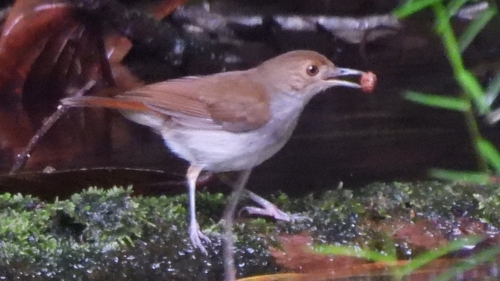
 White-chested Babbler
Trichastoma rostratum

Black-and-yellow Broadbill
Eurylaimus ochromalus

 Malaysian Blue-Flycatcher
Cyornis turcosus

 Hooded Pitta
Pitta sordida
Global Distribution
Warmer areas are where this animal is recorded most often.
Parks Where Found
| # | Park | Country | Daily sighting probability |
|---|---|---|---|
| 1 | Way Kambas National Park | 🇮🇩 Indonesia | |
| 2 | Gunung Leuser National Park | 🇮🇩 Indonesia | |
| 3 | Khao Sok National Park | 🇹🇭 Thailand | |
| 4 | Khao Luang National Park | 🇹🇭 Thailand | |
| 5 | Cat Tien National Park | 🇻🇳 Vietnam | |
| 6 | Taman Negara National Park | 🇲🇾 Malaysia | |
| 7 | Kaeng Krachan National Park | 🇹🇭 Thailand | |
| 8 | Jiuzhaigou National Park | 🇨🇳 China | |
| 9 | Kerinci Seblat National Park | 🇮🇩 Indonesia | |
| 10 | Danum Valley Conservation Area | 🇲🇾 Malaysia | |
| 11 | Sepilok | 🇲🇾 Malaysia | |
| 12 | Kinabatangan Wildlife Sanctuary | 🇲🇾 Malaysia |