


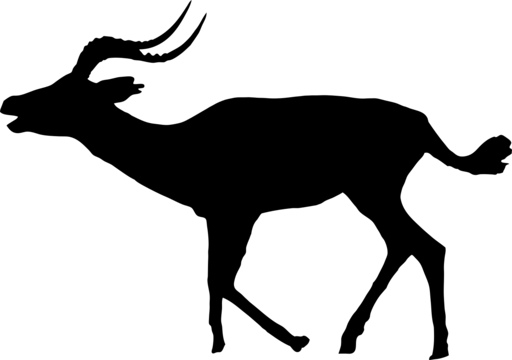
Southern Serow
Capricornis sumatraensis
Silhouette: [unknown] · PhyloPic
- KingdomAnimalia (Animals)
- PhylumChordata (Chordates)
- ClassMammalia (Mammals)
- OrderArtiodactyla (Even-toed Ungulates and Cetaceans)
- FamilyBovidae (Bovids)
- GenusCapricornis (Serows)
- SpeciesCapricornis sumatraensis (Southern Serow)
About the Southern Serow
The mainland serow (Capricornis sumatraensis) is a species of serow native to the Himalayas, Southeast Asia and China. The mainland serow is related closely to the red serow. In 1831, Brian Houghton Hodgson first described a goat-like animal with short annulated horns occurring in montane regions between the Sutlej and Teesta Rivers under the name "Bubaline Antelope". As "Bubaline" was preoccupied, he gave it the scientific name Antelope thar a few months later.
When William Ogilby described the genus Capricornis in 1838, he determined the Himalayan serow as type species of this genus. Teeth from a mainland serow were found in a dig in Khok Sung district, estimated to originate from the Middle Pleistocene.
The mainland serow possesses guard hairs on its coat that are bristly or coarse and cover the layer of fur closest to its skin to varying degrees. The animal has a mane that runs from the horns to the middle of the dorsal aspect of the animal between the scapulae covering the skin. The horns are only characteristic of the males and are light-colored, approximately 150 mm (6 in) in length, and curve slightly towards its back. Both male and female... Wikipedia →
Recent sightings of Southern Serow in Langtang National Park
LIVEiNaturalist


Global Distribution
Warmer areas are where this animal is recorded most often.
Parks Where Found
| # | Park | Country | Daily sighting probability |
|---|---|---|---|
| 1 | Khao Yai National Park | 🇹🇭 Thailand | |
| 2 | Gunung Leuser National Park | 🇮🇩 Indonesia | |
| 3 | Langtang National Park | 🇳🇵 Nepal | |
| 4 | Doi Inthanon National Park | 🇹🇭 Thailand | |
| 5 | Kaeng Krachan National Park | 🇹🇭 Thailand |