


Yellow-wattled Lapwing
Vanellus malabaricus
- KingdomAnimalia (Animals)
- PhylumChordata (Chordates)
- ClassAves (Birds)
- OrderCharadriiformes (Shorebirds and Allies)
- FamilyCharadriidae (Plovers and Lapwings)
- GenusVanellus (Lapwings)
- SpeciesVanellus malabaricus (Yellow-wattled Lapwing)
About the Yellow-wattled Lapwing
The yellow-wattled lapwing (Vanellus malabaricus) is a lapwing that is endemic to the Indian subcontinent. It is found mainly on the dry plains of peninsular India and has a sharp call and is capable of fast flight. Although they do not migrate, they are known to make seasonal movements in response to rains. They are dull grey brown with a black cap, yellow legs and a triangular wattle at the base of the beak. Like other lapwings and plovers, they are ground birds and their nest is a mere collection of tiny pebbles within which their well camouflaged eggs are laid. The chicks are nidifugous, leaving the nest shortly after hatching and following their parents to forage for food.
The yellow-wattled lapwing was described by the French polymath Georges-Louis Leclerc, Comte de Buffon in his Histoire Naturelle des Oiseaux in 1781. The bird was also illustrated in a hand-coloured plate engraved by François-Nicolas Martinet in the Planches Enluminées D'Histoire Naturelle. This plate was produced under the supervision of Edme-Louis Daubenton to accompany Buffon's text. Neither the plate caption nor Buffon's description included a scientific name but in 1783 the Dutch naturalist... Wikipedia →
Closest Relatives at Manas National Park

Red-wattled Lapwing
Vanellus indicus

River Lapwing
Vanellus duvaucelii

Grey-headed Lapwing
Vanellus cinereus

Northern Lapwing
Vanellus vanellus

Pacific Golden-Plover
Pluvialis fulva

Green Sandpiper
Tringa ochropus
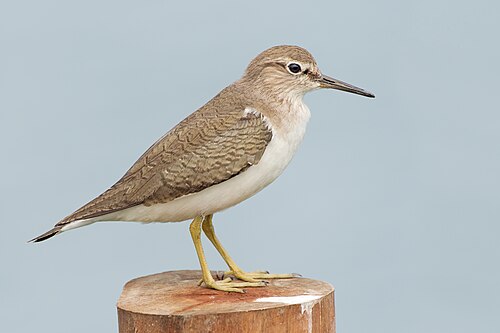
Common Sandpiper
Actitis hypoleucos

Common Snipe
Gallinago gallinago

Bronze-winged Jacana
Metopidius indicus

Barred Buttonquail
Turnix suscitator

Greater Painted-Snipe
Rostratula benghalensis

Small Pratincole
Glareola lactea
Global Distribution
Where this species is recorded worldwide. Restricted to human observations from 2019 onwards — the same kind of record and the same period the probabilities on this page are built from, so collar-tracking studies, camera-trap arrays and museum specimens are excluded. Around Santa Rosa that removes 5,924 GPS fixes from a handful of tagged jaguars.
where this species is recorded (GBIF density — it tracks where observers go, not how likely a sighting is) · parks where it occurs — tap a pin for the sighting probability there
Parks Where Found
| # | Park | Country | Daily sighting probability |
|---|---|---|---|
| 1 | Yala National Park | 🇱🇰 Sri Lanka | |
| 2 | Kanha National Park | 🇮🇳 India | |
| 3 | Mudumalai National Park | 🇮🇳 India | |
| 4 | Bandhavgarh National Park | 🇮🇳 India | |
| 5 | Wilpattu National Park | 🇱🇰 Sri Lanka | |
| 6 | Gir National Park | 🇮🇳 India | |
| 7 | Ranthambore National Park | 🇮🇳 India | |
| 8 | Keoladeo National Park | 🇮🇳 India | |
| 9 | Satpura National Park | 🇮🇳 India | |
| 10 | Bandipur National Park | 🇮🇳 India | |
| 11 | Nagarhole National Park | 🇮🇳 India | |
| 12 | Jim Corbett National Park | 🇮🇳 India | |
| 13 | Chitwan National Park | 🇳🇵 Nepal | |
| 14 | Minneriya National Park | 🇱🇰 Sri Lanka | |
| 15 | Sinharaja Forest Reserve | 🇱🇰 Sri Lanka | |
| 16 | Manas National Park | 🇮🇳 India |