


Northern Lapwing
Vanellus vanellus
- KingdomAnimalia (Animals)
- PhylumChordata (Chordates)
- ClassAves (Birds)
- OrderCharadriiformes (Shorebirds and Allies)
- FamilyCharadriidae (Plovers and Lapwings)
- GenusVanellus (Lapwings)
- SpeciesVanellus vanellus (Northern Lapwing)
About the Northern Lapwing
The northern lapwing (Vanellus vanellus), also known as the peewit or pewit, tuit or tewit, green plover, or (in Ireland and Great Britain) pyewipe or just lapwing, is a bird in the lapwing subfamily. It is common through temperate Eurosiberia.
The northern lapwing was formally described by the Swedish naturalist Carl Linnaeus in 1758 in the tenth edition of his Systema Naturae under the binomial name Tringa vanellus. The species is now placed with the other lapwings in the genus Vanellus that was introduced by the French zoologist Mathurin Jacques Brisson in 1760. The scientific name Vanellus is Medieval Latin for the northern lapwing and derives from vannus, a winnowing fan. The species is monotypic: no subspecies are recognised.
The name lapwing has been variously attributed to the "lapping" sound its wings make in flight, to its irregular flight path due to its large wings (the Oxford English Dictionary derives this from an Old English word meaning "to totter"), or from its habit of drawing potential predators away from its nest by trailing a wing as if it were broken. The names peewit, pewit, tuit or tew-it are onomatopoeic and refer to the bird's characteristic... Wikipedia →
Closest Relatives at Manas National Park

Red-wattled Lapwing
Vanellus indicus

River Lapwing
Vanellus duvaucelii

Grey-headed Lapwing
Vanellus cinereus

Yellow-wattled Lapwing
Vanellus malabaricus

Pacific Golden-Plover
Pluvialis fulva

Green Sandpiper
Tringa ochropus
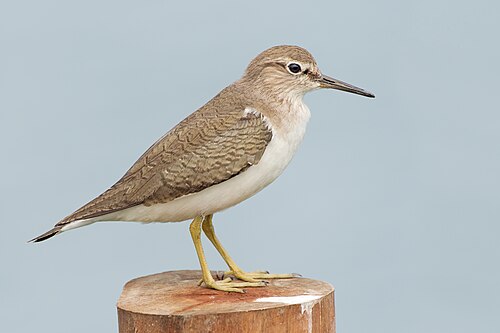
Common Sandpiper
Actitis hypoleucos

Common Snipe
Gallinago gallinago

Bronze-winged Jacana
Metopidius indicus

Barred Buttonquail
Turnix suscitator

Greater Painted-Snipe
Rostratula benghalensis

Small Pratincole
Glareola lactea
Global Distribution
Where this species is recorded worldwide. Restricted to human observations from 2019 onwards — the same kind of record and the same period the probabilities on this page are built from, so collar-tracking studies, camera-trap arrays and museum specimens are excluded. Around Santa Rosa that removes 5,924 GPS fixes from a handful of tagged jaguars.
where this species is recorded (GBIF density — it tracks where observers go, not how likely a sighting is) · parks where it occurs — tap a pin for the sighting probability there
Parks Where Found
Quick answers
What are the chances of seeing a Northern Lapwing in Manas National Park?
Under 5% of wildlife watchers report a Northern Lapwing sighting in Manas National Park, based on 73 verified sightings from GBIF citizen-science data.
When is the best time to see Northern Lapwing in Manas National Park?
January has the highest sighting rate for Northern Lapwing in Manas National Park in our monthly data.