


Pacific Golden-Plover
Pluvialis fulva
- KingdomAnimalia (Animals)
- PhylumChordata (Chordates)
- ClassAves (Birds)
- OrderCharadriiformes (Shorebirds and Allies)
- FamilyCharadriidae (Plovers and Lapwings)
- GenusPluvialis (Golden Plovers and Grey Plover)
- SpeciesPluvialis fulva (Pacific Golden-Plover)
About the Pacific Golden-Plover
The Pacific golden plover (Pluvialis fulva) is a migratory shorebird that breeds during summer in Alaska and Siberia. During nonbreeding season, this medium-sized plover migrates widely across the Pacific. The Pacific golden plover was formally described in 1789 by the German naturalist Johann Friedrich Gmelin in his revised and expanded edition of Carl Linnaeus's Systema Naturae. He placed it with the other plovers in the genus Charadrius and coined the binomial name Charadrius fulvus. Gmelin based his description on the "Fulvous plover" that had been described in 1785 by the English ornithologist John Latham from specimens from Tahiti. The Pacific golden plover is now placed in the genus Pluvialis that was introduced by the French zoologist Mathurin Jacques Brisson in 1760. The genus name is Latin and means relating to rain, from pluvia, 'rain'. It was believed that the plovers flocked when rain was imminent. The specific epithet is also from Latin and means 'tawny' or 'yellowish-brown'. The species is monotypic: no subspecies are recognised.
Adults are about 25 cm (9.8 in) long with a wingspan averaging 61 cm (24 in) At their lightest, fat free,... Wikipedia →
Closest Relatives at Manas National Park

Red-wattled Lapwing
Vanellus indicus

River Lapwing
Vanellus duvaucelii

Grey-headed Lapwing
Vanellus cinereus

Northern Lapwing
Vanellus vanellus

Yellow-wattled Lapwing
Vanellus malabaricus

Green Sandpiper
Tringa ochropus
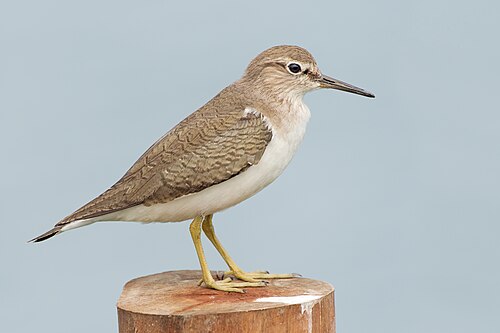
Common Sandpiper
Actitis hypoleucos

Common Snipe
Gallinago gallinago

Bronze-winged Jacana
Metopidius indicus

Barred Buttonquail
Turnix suscitator

Greater Painted-Snipe
Rostratula benghalensis

Small Pratincole
Glareola lactea
Global Distribution
Where this species is recorded worldwide. Restricted to human observations from 2019 onwards — the same kind of record and the same period the probabilities on this page are built from, so collar-tracking studies, camera-trap arrays and museum specimens are excluded. Around Santa Rosa that removes 5,924 GPS fixes from a handful of tagged jaguars.
where this species is recorded (GBIF density — it tracks where observers go, not how likely a sighting is) · parks where it occurs — tap a pin for the sighting probability there