
Greater Painted-Snipe
Rostratula benghalensis
- KingdomAnimalia (Animals)
- PhylumChordata (Chordates)
- ClassAves (Birds)
- OrderCharadriiformes (Shorebirds and Allies)
- FamilyRostratulidae (Painted-snipes)
- GenusRostratula (Old World Painted-snipes)
- SpeciesRostratula benghalensis (Greater Painted-Snipe)
About the Greater Painted-Snipe
The greater painted-snipe (Rostratula benghalensis) is a species of wader in the small painted-snipe family Rostratulidae. It widely distributed across Africa and southern Asia and is found in a variety of wetland habitats, including swamps and the edges of larger water bodies such as lakes and rivers. This species is sexually dimorphic with the female being larger and more brightly coloured than the male. The female is normally polyandrous with the males incubating the eggs and caring for the young.
The greater painted-snipe was formally described in 1758 by the Swedish naturalist Carl Linnaeus in the tenth edition of his Systema Naturae. He placed it with the rails in the genus Rallus and coined the binomial name Rallus benghalenis. Linnaeus based his account on the "Bengall water rail" that had been described and illustrated in 1738 by the English naturalist Eleazar Albin in his A Natural History of Birds. Albin had examined a drawing that had been sent to the English silk-pattern designer Joseph Dandridge from Bengal. The greater painted-snipe is now placed with the Australian painted-snipe in the genus Rostratula that was introduced in 1816 by the French ornithologist... Wikipedia →
Closest Relatives at Manas National Park

Red-wattled Lapwing
Vanellus indicus

River Lapwing
Vanellus duvaucelii

Green Sandpiper
Tringa ochropus
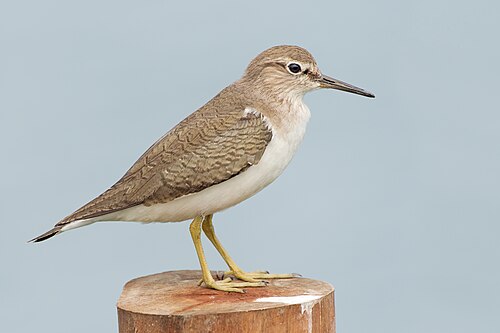
Common Sandpiper
Actitis hypoleucos

Common Snipe
Gallinago gallinago

Grey-headed Lapwing
Vanellus cinereus

Bronze-winged Jacana
Metopidius indicus

Northern Lapwing
Vanellus vanellus

Barred Buttonquail
Turnix suscitator

Small Pratincole
Glareola lactea

Common Greenshank
Tringa nebularia

Pheasant-tailed Jacana
Hydrophasianus chirurgus
Global Distribution
Where this species is recorded worldwide. Restricted to human observations from 2019 onwards — the same kind of record and the same period the probabilities on this page are built from, so collar-tracking studies, camera-trap arrays and museum specimens are excluded. Around Santa Rosa that removes 5,924 GPS fixes from a handful of tagged jaguars.
where this species is recorded (GBIF density — it tracks where observers go, not how likely a sighting is) · parks where it occurs — tap a pin for the sighting probability there
Parks Where Found
Quick answers
What are the chances of seeing a Greater Painted-Snipe in Manas National Park?
Under 5% of wildlife watchers report a Greater Painted-Snipe sighting in Manas National Park, based on 44 verified sightings from GBIF citizen-science data.
When is the best time to see Greater Painted-Snipe in Manas National Park?
February has the highest sighting rate for Greater Painted-Snipe in Manas National Park in our monthly data.