


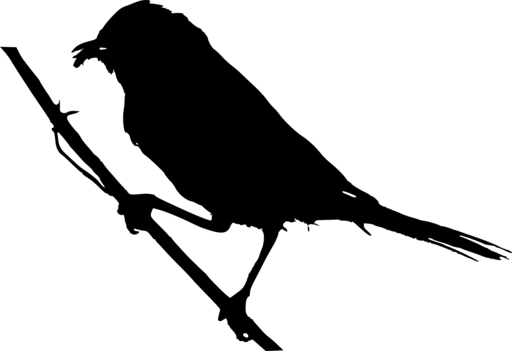
Sardinian Warbler
Curruca melanocephala
Silhouette: Alexis Lours · PhyloPic
- KingdomAnimalia (Animals)
- PhylumChordata (Chordates)
- ClassAves (Birds)
- OrderPasseriformes (Perching Birds)
- FamilySylviidae (Sylviid Warblers and Allies)
- GenusCurruca (Curruca Warblers)
- SpeciesCurruca melanocephala (Sardinian Warbler)
About the Sardinian Warbler
The Sardinian warbler (Curruca melanocephala) is a common and widespread Sylviidae warbler from the Mediterranean region. Like most Curruca species, it has distinct male and female plumages. The adult male has a grey back, whitish underparts, black head, white throat and red eyes. Plumages are somewhat variable even in the same locality, with the intensity of a reddish hue on upper- and/or underside that varies from absent to (in some subspecies) pronounced. The female is mainly brown above and buff below, with a grey head. The Sardinian warbler's song is fast and rattling, and is very characteristic of the Mediterranean areas where this bird breeds.
The Sardinian warbler was formally described in 1789 by the German naturalist Johann Friedrich Gmelin in his revised and expanded edition of Carl Linnaeus's Systema Naturae. He placed it with the wagtails in the genus Motacilla and coined the binomial name Motacilla melanocephala. Gmelin based his entry on a description by the Italian zoologist Francesco Cetti in his book Gli uccelli di Sardegna (The Birds of Sardinia) that was published in 1776. This was the second volume of his Storia naturale di Sardegna... Wikipedia →
Recent sightings of Sardinian Warbler in Mercantour National Park
LIVEiNaturalistClosest Relatives at Mercantour National Park

 Western Subalpine Warbler
Curruca iberiae

Moltoni's Warbler
Curruca subalpina

 Blackcap
Sylvia atricapilla

Whitethroat
Sylvia communis

 Dartford Warbler
Sylvia undata

Lesser Whitethroat
Sylvia curruca

Garden Warbler
Sylvia borin

 Chaffinch
Fringilla coelebs

 Black Redstart
Phoenicurus ochruros

 Carrion Crow
Corvus corone

 Great Tit
Parus major

 Eurasian Blackbird
Turdus merula
Global Distribution
Warmer areas are where this animal is recorded most often.
Parks Where Found
| # | Park | Country | Daily sighting probability |
|---|---|---|---|
| 1 | Sierra Nevada National Park | 🇪🇸 Spain | |
| 2 | Monfragüe National Park | 🇪🇸 Spain | |
| 3 | Doñana National Park | 🇪🇸 Spain | |
| 4 | Camargue | 🇫🇷 France | |
| 5 | Sierra de Guadarrama National Park | 🇪🇸 Spain | |
| 6 | Pyrénées National Park | 🇫🇷 France | |
| 7 | Cévennes National Park | 🇫🇷 France | |
| 8 | Kiskunság National Park | 🇭🇺 Hungary | |
| 9 | Ordesa y Monte Perdido National Park | 🇪🇸 Spain | |
| 10 | Aigüestortes National Park | 🇪🇸 Spain | |
| 11 | Picos de Europa National Park | 🇪🇸 Spain | |
| 12 | Wadden Sea National Park | 🇩🇪 Germany | |
| 13 | Mercantour National Park | 🇫🇷 France | |
| 14 | Niokolo-Koba National Park | 🇸🇳 Senegal |