


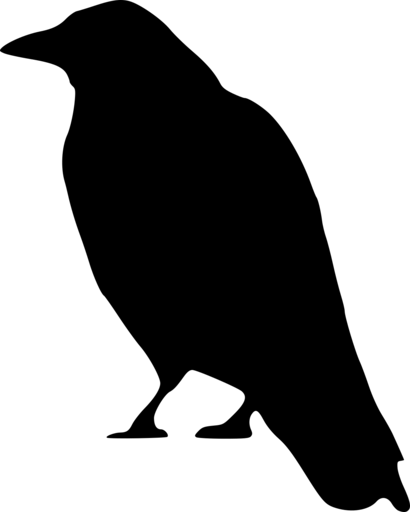
Cape Crow
Corvus capensis
Silhouette: Peileppe · PhyloPic
- KingdomAnimalia (Animals)
- PhylumChordata (Chordates)
- ClassAves (Birds)
- OrderPasseriformes (Perching Birds)
- FamilyCorvidae (Crows, Jays, and Magpies)
- GenusCorvus (Crows and Ravens)
- SpeciesCorvus capensis (Cape Crow)
About the Cape Crow
The Cape crow or black crow (Corvus capensis) is slightly larger (48–50 cm in length) than the carrion crow and is completely black with a slight gloss of purple in its feathers. It also has proportionately longer legs, wings, and tail, and has a much longer, slimmer bill that seems to be adapted for probing into the ground for invertebrates. The head feathers have a coppery-purple gloss and the throat feathers are quite long and fluffed out in some calls and displays.
This species occurs in two large separate regions of the African continent. One form ranges from the Cape at the southern tip of Africa north to southern Angola and across to the east coast of Mozambique. The other population occurs in a large area from South Sudan, Ethiopia, Tanzania, and Kenya in central East Africa. The more northern population is on average slightly smaller than the southern. It inhabits open grassland, moorland, and agricultural areas with some trees or woodland in the vicinity for nesting. It seems to thrive especially in agricultural areas.
It eats grain and other seeds, and invertebrates, which it digs for with powerful downward stabs of... Wikipedia →
Recent sightings of Cape Crow in Nairobi National Park
LIVEiNaturalistClosest Relatives at Nairobi National Park

 Pied Crow
Corvus albus

 Common Bulbul
Pycnonotus barbatus

 Long-tailed Fiscal
Lanius cabanisi

 Superb Starling
Lamprotornis superbus

 Red-billed Oxpecker
Buphagus erythrorhynchus

 Kenya Rufous Sparrow
Passer rufocinctus

Northern Pied-Babbler
Turdoides hypoleuca

Variable Sunbird
Cinnyris venustus

 Purple Grenadier
Uraeginthus ianthinogaster

Reichenow's Seedeater
Crithagra reichenowi

Red-billed Firefinch
Lagonosticta senegala

Red-cheeked Cordon-bleu
Uraeginthus bengalus
Global Distribution
Warmer areas are where this animal is recorded most often.