



Ochre Bush Squirrel
Paraxerus ochraceus
Silhouette: Joseph Smit · PhyloPic
- KingdomAnimalia (Animals)
- PhylumChordata (Chordates)
- ClassMammalia (Mammals)
- OrderRodentia (Rodents)
- FamilySciuridae (Squirrels)
- GenusParaxerus (Bush Squirrels)
- SpeciesParaxerus ochraceus (Ochre Bush Squirrel)
9 Verified sightings at Ngorongoro Conservation Area From 2019 to 2026
111 Verified sightings across all 11 parks From 2019 to 2026
January Best month highest sighting rate
☀️ Diurnal When it's spotted during daytime hours (6am–6pm)
About the Ochre Bush Squirrel
The ochre bush squirrel (Paraxerus ochraceus) is a species of rodent in the family Sciuridae found in Kenya, Somalia, and Tanzania. Its natural habitat is dry savanna. Wikipedia →
Recent sightings of Ochre Bush Squirrel in Ngorongoro Conservation Area
LIVEiNaturalistClosest Relatives at Ngorongoro Conservation Area

LC
 Unstriped Ground Squirrel
Xerus rutilus

LC
 African Grass Rat
Arvicanthis niloticus

LC
 East African Spring-hare
Pedetes surdaster

LC
 Crested Porcupine
Hystrix cristata

LC
Single-striped Grass Mouse
Lemniscomys rosalia

LC
Typical Lemniscomys
Lemniscomys striatus
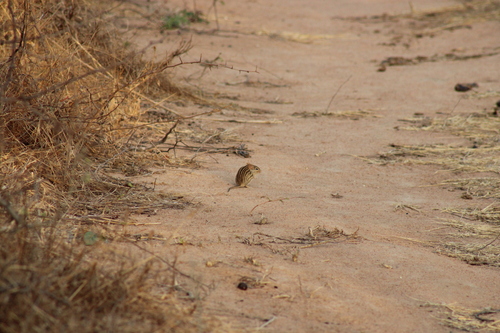
LC
Heuglin's Lemniscomys
Lemniscomys zebra

LC
Mesic Four-striped Grass Rat
Rhabdomys dilectus
Global Distribution
Warmer areas are where this animal is recorded most often.
Parks Where Found
| # | Park | Country | Daily sighting probability |
|---|---|---|---|
| 1 | Ruaha National Park | 🇹🇿 Tanzania | |
| 2 | Aberdare National Park | 🇰🇪 Kenya | |
| 3 | Tarangire National Park | 🇹🇿 Tanzania | |
| 4 | Arusha National Park | 🇹🇿 Tanzania | |
| 5 | Tsavo West National Park | 🇰🇪 Kenya | |
| 6 | Lake Manyara National Park | 🇹🇿 Tanzania | |
| 7 | Tsavo East National Park | 🇰🇪 Kenya | |
| 8 | Nairobi National Park | 🇰🇪 Kenya | |
| 9 | Ngorongoro Conservation Area | 🇹🇿 Tanzania | |
| 10 | Mkomazi National Park | 🇹🇿 Tanzania | |
| 11 | Samburu National Reserve | 🇰🇪 Kenya |
Quick answers
What are the chances of seeing a Ochre Bush Squirrel in Ngorongoro Conservation Area?
About 10% of wildlife watchers report a Ochre Bush Squirrel sighting in Ngorongoro Conservation Area, based on 9 verified sightings from GBIF citizen-science data.
When is the best time to see Ochre Bush Squirrel in Ngorongoro Conservation Area?
January has the highest sighting rate for Ochre Bush Squirrel in Ngorongoro Conservation Area in our monthly data.