



Piapiac
Ptilostomus afer
Silhouette: Sheatherius · PhyloPic
- KingdomAnimalia (Animals)
- PhylumChordata (Chordates)
- ClassAves (Birds)
- OrderPasseriformes (Perching Birds)
- FamilyCorvidae (Crows, Jays, and Magpies)
- GenusPtilostomus (Piapiacs)
- SpeciesPtilostomus afer (Piapiac)
About the Piapiac
The piapiac (Ptilostomus afer) is an African bird in the crow family, and is the only member of the genus Ptilostomus. It is most closely related to the Central Asian ground jays. In 1760 the French zoologist Mathurin Jacques Brisson included a description of the piapiac in his Ornithologie based on a specimen collected in Senegal. He used the French name La pie du Sénégal and the Latin Pica Senegalensis. Although Brisson coined Latin names, these do not conform to the binomial system and are not recognised by the International Commission on Zoological Nomenclature. When in 1766 the Swedish naturalist Carl Linnaeus updated his Systema Naturae for the twelfth edition, he added 240 species that had been previously described by Brisson. One of these was the piapiac. Linnaeus included a brief description, coined the binomial name Corvus afer and cited Brisson's work. The specific name afer is Latin for "Africa". The piapiac is the only species placed in the genus Ptilostomus that was introduced by the English naturalist William Swainson in 1837. The species is monotypic.
A molecular phylogenetic study published in 2005 found that the piapiac from Africa was most closely related... Wikipedia →
Recent sightings of Piapiac in Queen Elizabeth National Park
LIVEiNaturalistClosest Relatives at Queen Elizabeth National Park

 Pied Crow
Corvus albus

White-necked Raven
Corvus albicollis

 Black-headed Gonolek
Laniarius erythrogaster

 Rüppell's Glossy-starling
Lamprotornis purpuroptera

 Common Bulbul
Pycnonotus barbatus

 Grey-backed Fiscal
Lanius excubitoroides

Yellow-throated Longclaw
Macronyx croceus

 Pin-tailed Whydah
Vidua macroura

Red-billed Firefinch
Lagonosticta senegala

 White-browed Robin-Chat
Cossypha heuglini

Black-headed Weaver
Ploceus melanocephalus
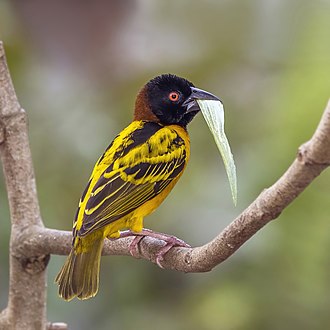
Village Weaver
Ploceus cucullatus
Global Distribution
Warmer areas are where this animal is recorded most often.
Parks Where Found
| # | Park | Country | Daily sighting probability |
|---|---|---|---|
| 1 | Kidepo Valley National Park | 🇺🇬 Uganda | |
| 2 | Murchison Falls National Park | 🇺🇬 Uganda | |
| 3 | Niokolo-Koba National Park | 🇸🇳 Senegal | |
| 4 | Queen Elizabeth National Park | 🇺🇬 Uganda | |
| 5 | Virunga National Park | 🇨🇩 Democratic Republic of the Congo | |
| 6 | Semuliki National Park | 🇺🇬 Uganda | |
| 7 | Kibale National Park | 🇺🇬 Uganda |
Quick answers
What are the chances of seeing a Piapiac in Queen Elizabeth National Park?
Under 5% of wildlife watchers report a Piapiac sighting in Queen Elizabeth National Park, based on 47 verified sightings from GBIF citizen-science data.
When is the best time to see Piapiac in Queen Elizabeth National Park?
October has the highest sighting rate for Piapiac in Queen Elizabeth National Park in our monthly data.