



Vieillot's Weaver
Ploceus nigerrimus
Silhouette: Sheatherius · PhyloPic
- KingdomAnimalia (Animals)
- PhylumChordata (Chordates)
- ClassAves (Birds)
- OrderPasseriformes (Perching Birds)
- FamilyPloceidae (Weavers and Allies)
- GenusPloceus (Typical Weavers)
- SpeciesPloceus nigerrimus (Vieillot's Weaver)
About the Vieillot's Weaver
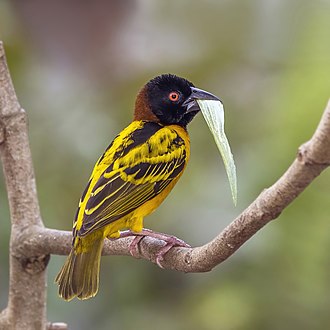
Vieillot's black weaver (Ploceus nigerrimus) is a species of bird in the family Ploceidae. It is found in southern Nigeria to Uganda, west Kenya, Angola and the Democratic Republic of the Congo. The common name is after the French ornithologist Louis Pierre Vieillot.
This species was formerly considered to be conspecific with chestnut-and-black weaver (Ploceus castaneofuscus). The species were split based on the striking differences in the colour of the plumage. Vieillot's black weaver - Species text in Weaver Watch. Wikipedia →
Recent sightings of Vieillot's Weaver in Queen Elizabeth National Park
LIVEiNaturalistClosest Relatives at Queen Elizabeth National Park

 Black-headed Weaver
Ploceus melanocephalus
Village Weaver
Ploceus cucullatus

Slender-billed Weaver
Ploceus pelzelni

Lesser Masked-Weaver
Ploceus intermedius

Spectacled Weaver
Ploceus ocularis

Holub's Golden-Weaver
Ploceus xanthops

Little Weaver
Ploceus luteolus

 Compact Weaver
Ploceus superciliosus

Baglafecht Weaver
Ploceus baglafecht

Northern Brown-throated Weaver
Ploceus castanops

Black-necked Weaver
Ploceus nigricollis

Golden-backed Weaver
Ploceus jacksoni
Global Distribution
Warmer areas are where this animal is recorded most often.
Parks Where Found
| # | Park | Country | Daily sighting probability |
|---|---|---|---|
| 1 | Kibale National Park | 🇺🇬 Uganda | |
| 2 | Semuliki National Park | 🇺🇬 Uganda | |
| 3 | Queen Elizabeth National Park | 🇺🇬 Uganda | |
| 4 | Bwindi Impenetrable National Park | 🇺🇬 Uganda | |
| 5 | Virunga National Park | 🇨🇩 Democratic Republic of the Congo | |
| 6 | Akagera National Park | 🇷🇼 Rwanda | |
| 7 | Murchison Falls National Park | 🇺🇬 Uganda | |
| 8 | Lake Mburo National Park | 🇺🇬 Uganda | |
| 9 | Volcanoes National Park | 🇷🇼 Rwanda |
Quick answers
What are the chances of seeing a Vieillot's Weaver in Queen Elizabeth National Park?
About 10% of wildlife watchers report a Vieillot's Weaver sighting in Queen Elizabeth National Park, based on 217 verified sightings from GBIF citizen-science data.
When is the best time to see Vieillot's Weaver in Queen Elizabeth National Park?
May has the highest sighting rate for Vieillot's Weaver in Queen Elizabeth National Park in our monthly data.