
Wedge-tailed Shearwater
Puffinus pacificus
- KingdomAnimalia (Animals)
- PhylumChordata (Chordates)
- ClassAves (Birds)
- OrderProcellariiformes (Tubenoses)
- FamilyProcellariidae (Shearwaters and Petrels)
- GenusPuffinus (Small Shearwaters)
- SpeciesPuffinus pacificus (Wedge-tailed Shearwater)
About the Wedge-tailed Shearwater
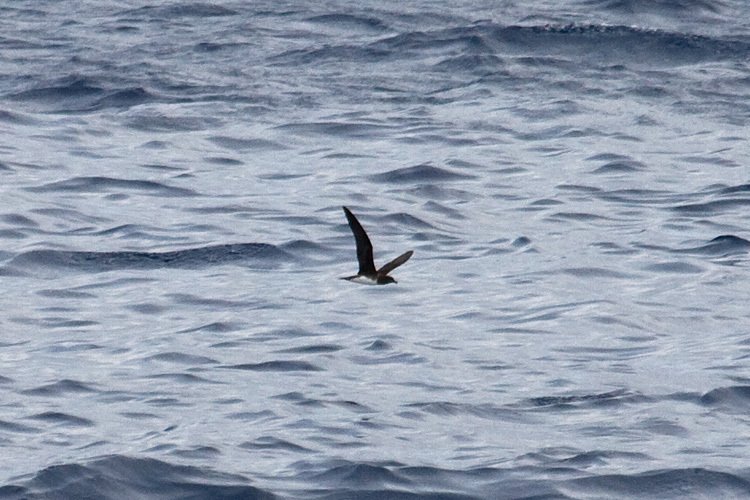
The wedge-tailed shearwater (Ardenna pacifica) (Uau Kani or Koto in Hawaiian) is a medium-large shearwater in the seabird family Procellariidae. It is one of the shearwater species that is sometimes referred to as a muttonbird, like the sooty shearwater of New Zealand and the short-tailed shearwater of Australia. It is found throughout the tropical Pacific and Indian Oceans, roughly between latitudes 35°N and 35°S. It breeds on the islands off Japan, on the Islas Revillagigedo, the Hawaiian Islands, the Seychelles, the Northern Mariana Islands, and off Eastern and Western Australia.
Its Hawaiian name "Uau Kani" reflects the sound of their bird call. Native Hawaiians had sometimes named birds after the nature of their melody. The wedge-tailed shearwater was formally described in 1789 by the German naturalist Johann Friedrich Gmelin in his revised and expanded edition of Carl Linnaeus's Systema Naturae. He placed it with the petrels in the genus Procellaria and coined the binomial name Procellaria pacifica. Gmelin based his description on the "Pacific petrel" that had been described in 1785 by the English ornithologist John Latham in his book A General Synopsis of Birds... Wikipedia →
Closest Relatives at Raja Ampat




Global Distribution
Where this species is recorded worldwide. Restricted to human observations from 2019 onwards — the same kind of record and the same period the probabilities on this page are built from, so collar-tracking studies, camera-trap arrays and museum specimens are excluded. Around Santa Rosa that removes 5,924 GPS fixes from a handful of tagged jaguars.
where this species is recorded (GBIF density — it tracks where observers go, not how likely a sighting is) · parks where it occurs — tap a pin for the sighting probability there
Parks Where Found
| # | Park | Country | Daily sighting probability |
|---|---|---|---|
| 1 | Cabo Blanco Absolute Nature Reserve | 🇨🇷 Costa Rica | |
| 2 | Isla del Coco National Park | 🇨🇷 Costa Rica | |
| 3 | Ningaloo Marine Park | 🇦🇺 Australia | |
| 4 | Cabo Pulmo National Park | 🇲🇽 Mexico | |
| 5 | Royal National Park | 🇦🇺 Australia | |
| 6 | Raja Ampat | 🇮🇩 Indonesia | |
| 7 | Manuel Antonio National Park | 🇨🇷 Costa Rica | |
| 8 | Corcovado National Park | 🇨🇷 Costa Rica | |
| 9 | Galápagos Islands | 🇪🇨 Ecuador | |
| 10 | Noosa National Park | 🇦🇺 Australia | |
| 11 | Cape Range | 🇦🇺 Australia | |
| 12 | Coiba National Park | 🇵🇦 Panama | |
| 13 | Booderee National Park | 🇦🇺 Australia | |
| 14 | Las Baulas Marine National Park | 🇨🇷 Costa Rica | |
| 15 | Santa Rosa National Park | 🇨🇷 Costa Rica | |
| 16 | Darién National Park | 🇵🇦 Panama | |
| 17 | Marino Ballena National Park | 🇨🇷 Costa Rica | |
| 18 | Daintree National Park | 🇦🇺 Australia | |
| 19 | Channel Islands National Park | 🇺🇸 United States |
Quick answers
What are the chances of seeing a Wedge-tailed Shearwater in Raja Ampat?
Under 5% of wildlife watchers report a Wedge-tailed Shearwater sighting in Raja Ampat, based on 17 verified sightings from GBIF citizen-science data.
When is the best time to see Wedge-tailed Shearwater in Raja Ampat?
October has the highest sighting rate for Wedge-tailed Shearwater in Raja Ampat in our monthly data.