


Zebra Dove
Geopelia striata
- KingdomAnimalia (Animals)
- PhylumChordata (Chordates)
- ClassAves (Birds)
- OrderColumbiformes (Pigeons and Doves)
- FamilyColumbidae (Pigeons and Doves)
- GenusGeopelia (Australasian Doves)
- SpeciesGeopelia striata (Zebra Dove)
About the Zebra Dove
The zebra dove (Geopelia striata), also known as the barred ground dove, or barred dove, is a species of bird of the dove family, Columbidae, native to Southeast Asia. They are small birds with a long tail, predominantly brownish-grey in colour with black-and-white barring. The species is known for its pleasant, soft, staccato cooing calls.
In 1743 the English naturalist George Edwards included a description and a picture of the zebra dove in his A Natural History of Uncommon Birds. His drawing was made from a live specimen at the home of admiral Charles Wager in Parsons Green near London. Edwards was told that the dove had been brought from the East Indies. When in 1766 the Swedish naturalist Carl Linnaeus updated his Systema Naturae for the twelfth edition, he included the zebra dove and placed it with all the other pigeons in the genus Columba. Linnaeus included a brief description, coined the binomial name Columba striata and cited Edwards's work. The specific name striata is from the Latin striatus meaning "striated". The type locality has been restricted to the island of Java in Indonesia. The species is now placed in the genus Geopelia that was introduced by the... Wikipedia →
Closest Relatives at Raja Ampat

Pinon Imperial-Pigeon
Ducula pinon

Claret-breasted Fruit-Dove
Ptilinopus viridis

Spice Imperial-Pigeon
Ducula myristicivora

Sultan's Cuckoo-Dove
Macropygia doreya

Pied Imperial Pigeon
Ducula bicolor

Western Crowned-Pigeon
Goura cristata

Great Cuckoo-Dove
Reinwardtoena reinwardti

Wompoo Fruit Dove
Ptilinopus magnificus

Stephan's Emerald Dove
Chalcophaps stephani
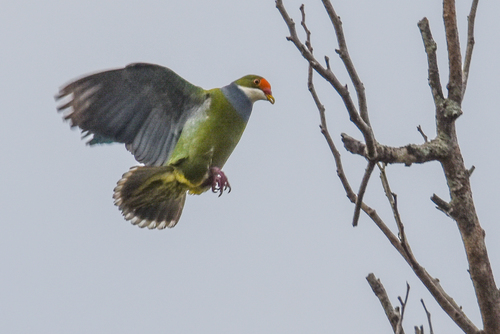
Orange-fronted Fruit-Dove
Ptilinopus aurantiifrons

Beautiful Fruit-Dove
Ptilinopus pulchellus

Pink-spotted Fruit-Dove
Ptilinopus perlatus
Global Distribution
Where this species is recorded worldwide. Restricted to human observations from 2019 onwards — the same kind of record and the same period the probabilities on this page are built from, so collar-tracking studies, camera-trap arrays and museum specimens are excluded. Around Santa Rosa that removes 5,924 GPS fixes from a handful of tagged jaguars.
where this species is recorded (GBIF density — it tracks where observers go, not how likely a sighting is) · parks where it occurs — tap a pin for the sighting probability there
Parks Where Found
| # | Park | Country | Daily sighting probability |
|---|---|---|---|
| 1 | Bali Barat National Park | 🇮🇩 Indonesia | |
| 2 | Cat Tien National Park | 🇻🇳 Vietnam | |
| 3 | Way Kambas National Park | 🇮🇩 Indonesia | |
| 4 | Sepilok | 🇲🇾 Malaysia | |
| 5 | Gunung Leuser National Park | 🇮🇩 Indonesia | |
| 6 | Tangkoko Nature Reserve | 🇮🇩 Indonesia | |
| 7 | Khao Yai National Park | 🇹🇭 Thailand | |
| 8 | Kaeng Krachan National Park | 🇹🇭 Thailand | |
| 9 | Doi Inthanon National Park | 🇹🇭 Thailand | |
| 10 | Bako National Park | 🇲🇾 Malaysia | |
| 11 | Kerinci Seblat National Park | 🇮🇩 Indonesia | |
| 12 | Taman Negara National Park | 🇲🇾 Malaysia | |
| 13 | Kinabatangan Wildlife Sanctuary | 🇲🇾 Malaysia | |
| 14 | Khao Luang National Park | 🇹🇭 Thailand | |
| 15 | Khao Sok National Park | 🇹🇭 Thailand | |
| 16 | Kinabalu Park | 🇲🇾 Malaysia | |
| 17 | Danum Valley Conservation Area | 🇲🇾 Malaysia | |
| 18 | Tanjung Puting National Park | 🇮🇩 Indonesia | |
| 19 | Raja Ampat | 🇮🇩 Indonesia |