


Western Meadowlark
Sturnella neglecta
- KingdomAnimalia (Animals)
- PhylumChordata (Chordates)
- ClassAves (Birds)
- OrderPasseriformes (Perching Birds)
- FamilyIcteridae (New World Blackbirds and Orioles)
- GenusSturnella (Yellow-breasted Meadowlarks)
- SpeciesSturnella neglecta (Western Meadowlark)
About the Western Meadowlark
The western meadowlark (Sturnella neglecta) is a medium-sized icterid bird, about 20 cm (7.9 in) in length. It is found across western and central North America and is a partial migrant, breeding in western Canada and western United States west of the Great Lakes, and in northern Mexico. In the northern half of the breeding range, the birds migrate south for the winter, while further south they are resident all year. The winter range also extends south and southeast of the breeding range, as far as central Mexico, and east to western Florida. The western meadowlark nests on the ground in open grasslands and shrublands. It feeds on bugs and seeds. The western meadowlark has distinctive calls described as watery or flute-like, which distinguish it from the closely related eastern meadowlark. The western meadowlark is the state bird of six states; in Kansas, Montana, Nebraska, North Dakota, Oregon, and Wyoming.
The western meadowlark was formally described in 1844 by the American ornithologist John James Audubon under its current binomial name Sturnella neglecta. The specific epithet is from the Latin neglectus meaning "ignored", "overlooked", "neglected" or "disregarded... Wikipedia →
Closest Relatives at Saguaro National Park

Chihuahuan Meadowlark
Sturnella lilianae

Great-tailed Grackle
Quiscalus mexicanus

Red-winged Blackbird
Agelaius phoeniceus

Brown-headed Cowbird
Molothrus ater

Hooded Oriole
Icterus cucullatus

Brewer's Blackbird
Euphagus cyanocephalus

Rusty Blackbird
Euphagus carolinus

Yellow-headed Blackbird
Xanthocephalus xanthocephalus

Bullock's Oriole
Icterus bullockii

Bronzed Cowbird
Molothrus aeneus

Scott's Oriole
Icterus parisorum
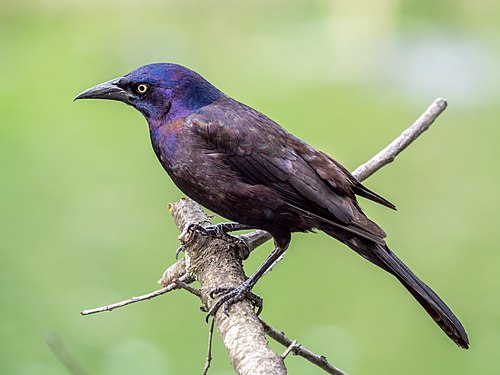
Common Grackle
Quiscalus quiscula
Global Distribution
Where this species is recorded worldwide. Restricted to human observations from 2019 onwards — the same kind of record and the same period the probabilities on this page are built from, so collar-tracking studies, camera-trap arrays and museum specimens are excluded. Around Santa Rosa that removes 5,924 GPS fixes from a handful of tagged jaguars.
where this species is recorded (GBIF density — it tracks where observers go, not how likely a sighting is) · parks where it occurs — tap a pin for the sighting probability there
Parks Where Found
Quick answers
What are the chances of seeing a Western Meadowlark in Saguaro National Park?
Under 5% of wildlife watchers report a Western Meadowlark sighting in Saguaro National Park, based on 866 verified sightings from GBIF citizen-science data.
When is the best time to see Western Meadowlark in Saguaro National Park?
October has the highest sighting rate for Western Meadowlark in Saguaro National Park in our monthly data.