


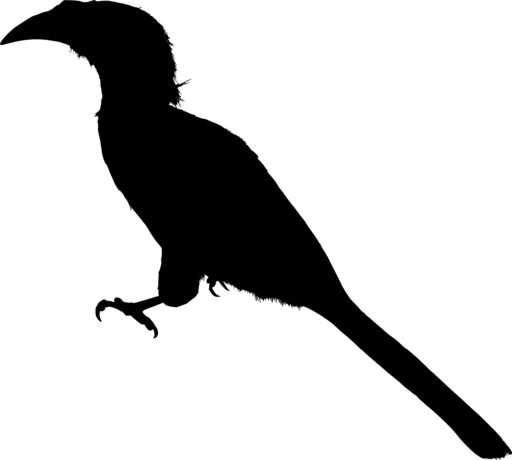
Black-and-white-casqued Hornbill
Bycanistes subcylindricus
Silhouette: Charles J. Sharp and T. Michael Keesey · PhyloPic
- KingdomAnimalia (Animals)
- PhylumChordata (Chordates)
- ClassAves (Birds)
- OrderBucerotiformes (Hornbills and Hoopoes)
- FamilyBucerotidae (Hornbills)
- GenusBycanistes (Bycanistes Hornbills)
- SpeciesBycanistes subcylindricus (Black-and-white-casqued Hornbill)
About the Black-and-white-casqued Hornbill
The black-and-white-casqued hornbill (Bycanistes subcylindricus), also known as the grey-cheeked hornbill, is a large black and white hornbill. It has an oversized blackish bill with a large casque on top. The female is slightly smaller than the male and has a significantly smaller casque.
It is a monogamous species, and pairs nest in suitable tree cavities. The female usually lays up to two eggs. The diet consists mainly of figs, fruits, insects and small animals found in the trees. Widespread and still locally common, the black-and-white-casqued hornbill is assessed as least concern on the IUCN Red List of Threatened Species.
Bycanistes subcylindricus is part of the Bycanistes genus of sub-Saharian hornbills which currently include a total of six known species that all share a black and white plummage and are mostly frugivores. This genus has recently been related to the Bucorvus genus, known as Ground Hornbills. Most of the species in that genus have a casque, which is larger in males than females. The closest relative to the black-and-white-casqued hornbill is Bycanistes cylindricus or brown-cheeked hornbill which inhabits a similar habitat range. Wikipedia →
Recent sightings of Black-and-white-casqued Hornbill in Semuliki National Park
LIVEiNaturalistClosest Relatives at Semuliki National Park

 Piping Hornbill
Bycanistes fistulator

White-thighed Hornbill
Bycanistes albotibialis

African Pied Hornbill
Lophoceros fasciatus

Black-casqued Hornbill
Ceratogymna atrata

Red-billed Dwarf Hornbill
Lophoceros camurus
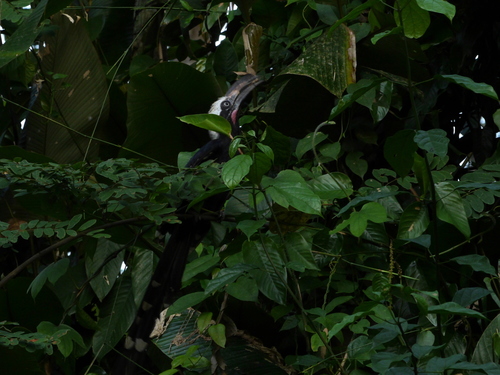
White-crested Hornbill
Horizocerus albocristatus

Crowned Hornbill
Lophoceros alboterminatus
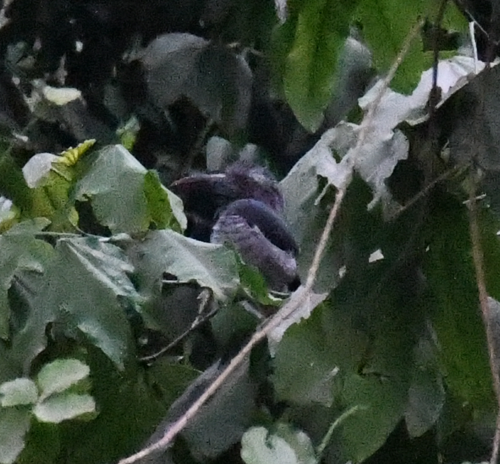
Black Dwarf Hornbill
Horizocerus hartlaubi

African Grey Hornbill
Lophoceros nasutus

 Northern Ground Hornbill
Bucorvus abyssinicus
Global Distribution
Warmer areas are where this animal is recorded most often.
Parks Where Found
| # | Park | Country | Daily sighting probability |
|---|---|---|---|
| 1 | Kibale National Park | 🇺🇬 Uganda | |
| 2 | Semuliki National Park | 🇺🇬 Uganda | |
| 3 | Bwindi Impenetrable National Park | 🇺🇬 Uganda | |
| 4 | Nyungwe National Park | 🇷🇼 Rwanda | |
| 5 | Virunga National Park | 🇨🇩 Democratic Republic of the Congo | |
| 6 | Queen Elizabeth National Park | 🇺🇬 Uganda | |
| 7 | Murchison Falls National Park | 🇺🇬 Uganda | |
| 8 | Masai Mara National Reserve | 🇰🇪 Kenya | |
| 9 | Lake Mburo National Park | 🇺🇬 Uganda | |
| 10 | Serengeti National Park | 🇹🇿 Tanzania | |
| 11 | Kidepo Valley National Park | 🇺🇬 Uganda |
Quick answers
What are the chances of seeing a Black-and-white-casqued Hornbill in Semuliki National Park?
About 40% of wildlife watchers report a Black-and-white-casqued Hornbill sighting in Semuliki National Park, based on 199 verified sightings from GBIF citizen-science data.
When is the best time to see Black-and-white-casqued Hornbill in Semuliki National Park?
August has the highest sighting rate for Black-and-white-casqued Hornbill in Semuliki National Park in our monthly data.