
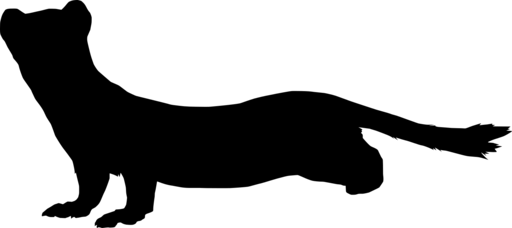
Stoat
Mustela erminea
Silhouette: Margot Michaud · PhyloPic
- KingdomAnimalia (Animals)
- PhylumChordata (Chordates)
- ClassMammalia (Mammals)
- OrderCarnivora (Carnivorans)
- FamilyMustelidae (Mustelids)
- GenusMustela (Typical weasels)
- SpeciesMustela erminea (Stoat)
About the Stoat
The stoat (Mustela erminea), also known as the Eurasian ermine or ermine, is a species of mustelid native to Eurasia and the northern regions of North America. Because of its wide circumpolar distribution, it is listed as Least Concern on the IUCN Red List. The name ermine is used especially in its pure white winter coat of the stoat or its fur. Ermine fur was used in the 15th century by Catholic monarchs, who sometimes used it as the mozzetta cape. It has long been used on the ceremonial robes of members of the United Kingdom House of Lords. It was also used in capes on images such as the Infant Jesus of Prague.
The stoat was introduced into New Zealand in the late 19th century to control rabbits. However, they have had a devastating effect on native bird populations; as such, the species was nominated as one of the world's top 100 "worst invaders".
The root word for "stoat" is likely either the Dutch word stout ("bold") or the Gothic word 𐍃𐍄𐌰𐌿𐍄𐌰𐌽 (stautan, "to push"). According to John Guillim, in his Display of Heraldrie, the word "ermine" is likely derived from Armenia, the nation where it was thought the species originated, though other authors have linked it... Wikipedia →
Recent sightings of Stoat in Banff National Park
LIVEiNaturalistClosest Relatives at Banff National Park

 Least Weasel
Mustela nivalis

 American Marten
Martes americana

 Northern River Otter
Lontra canadensis

 Wolverine
Gulo gulo

 American Black Bear
Ursus americanus

 Brown Bear
Ursus arctos

 Coyote
Canis latrans

 Red Fox
Vulpes vulpes

 Gray Wolf
Canis lupus

 Canada Lynx
Lynx canadensis

 Striped Skunk
Mephitis mephitis

 Mountain Lion
Puma concolor
Global Distribution
Warmer areas are where this animal is recorded most often.
Parks Where Found
Quick answers
What are the chances of seeing a Stoat in Banff National Park?
About 10% of wildlife watchers report a Stoat sighting in Banff National Park, based on 12 verified sightings from GBIF citizen-science data.
When is the best time to see Stoat in Banff National Park?
December has the highest sighting rate for Stoat in Banff National Park in our monthly data.