
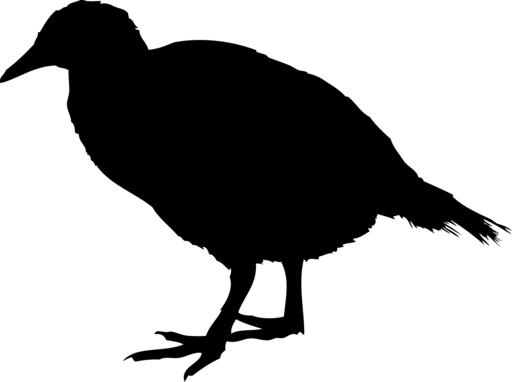
Baillon's Crake
Porzana pusilla
Silhouette: T. Michael Keesey (vectorization) and HuttyMcphoo (photography) · PhyloPic
- KingdomAnimalia (Animals)
- PhylumChordata (Chordates)
- ClassAves (Birds)
- OrderGruiformes (Cranes, Rails, and Allies)
- FamilyRallidae (Rails, Gallinules, and Coots)
- GenusPorzana (Spotted Crakes and allies)
- SpeciesPorzana pusilla (Baillon's Crake)
About the Baillon's Crake
Baillon's crake (Zapornia pusilla), also known as the marsh crake, is a small waterbird of the family Rallidae. Their breeding habitat is sedge beds and swamps, ranging from Eastern Europe to Honshu in Japan. The total breeding population in Europe as of 2016 was suspected to be 4,000 to 9,000 individuals. They used to breed in Great Britain up to the mid-19th century, but the Hungarian population declined in the 20th century due to wetland drainage. There has been a recovery in north-western Europe in recent years, with the recolonisation of Germany and the Netherlands, and breeding suspected in Britain; an Irish record in 2012 was the first there since the 1850s. They nest in dry locations in wet sedge bogs, laying 4–8 eggs. This species is migratory, wintering in East Africa and South Asia, as well as being a resident breeder in Africa and Australasia.
There is a single North American record of this species on Attu Island in September 2000. There are at least five subspecies of Baillon's crake: Zapornia pusilla affinis in New Zealand Zapornia pusilla palustris in Australia and New Guinea
Zapornia pusilla mira in Borneo Zapornia pusilla intermedia... Wikipedia →
Recent sightings of Baillon's Crake in Chobe National Park
LIVEiNaturalistClosest Relatives at Chobe National Park

 Black Crake
Amaurornis flavirostra

 Western Swamphen
Porphyrio porphyrio

 Common Moorhen
Gallinula chloropus

Allen's Gallinule
Porphyrio alleni

 African Crake
Crex egregia

Lesser Moorhen
Gallinula angulata

 Red-knobbed Coot
Fulica cristata

 African Rail
Rallus caerulescens

 Red-chested Flufftail
Sarothrura rufa
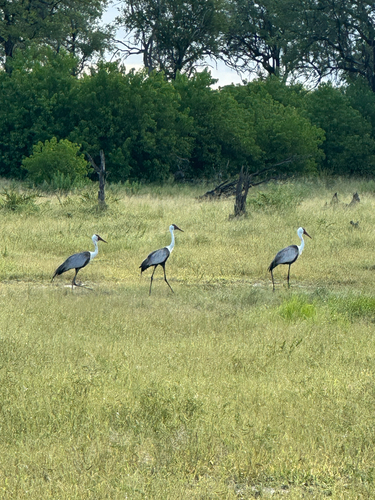
 Wattled Crane
Bugeranus carunculatus

African Finfoot
Podica senegalensis

 Grey Crowned Crane
Balearica regulorum
Global Distribution
Warmer areas are where this animal is recorded most often.
Parks Where Found
| # | Park | Country | Daily sighting probability |
|---|---|---|---|
| 1 | Amboseli National Park | 🇰🇪 Kenya | |
| 2 | Fiordland National Park | 🇳🇿 New Zealand | |
| 3 | Keoladeo National Park | 🇮🇳 India | |
| 4 | Grampians National Park | 🇦🇺 Australia | |
| 5 | Great Otway National Park | 🇦🇺 Australia | |
| 6 | Blue Mountains National Park | 🇦🇺 Australia | |
| 7 | Ngorongoro Conservation Area | 🇹🇿 Tanzania | |
| 8 | Kruger National Park | 🇿🇦 South Africa | |
| 9 | Table Mountain National Park | 🇿🇦 South Africa | |
| 10 | Hwange National Park | 🇿🇼 Zimbabwe | |
| 11 | Lake Nakuru National Park | 🇰🇪 Kenya | |
| 12 | Garden Route National Park | 🇿🇦 South Africa | |
| 13 | Abel Tasman National Park | 🇳🇿 New Zealand | |
| 14 | Sundarbans National Park | 🇮🇳 India | |
| 15 | Moremi Game Reserve | 🇧🇼 Botswana | |
| 16 | Camargue | 🇫🇷 France | |
| 17 | Fertő-Hanság National Park | 🇭🇺 Hungary | |
| 18 | Doñana National Park | 🇪🇸 Spain | |
| 19 | Kanha National Park | 🇮🇳 India | |
| 20 | Chobe National Park | 🇧🇼 Botswana | |
| 21 | Serengeti National Park | 🇹🇿 Tanzania | |
| 22 | Raja Ampat | 🇮🇩 Indonesia | |
| 23 | Kakadu National Park | 🇦🇺 Australia | |
| 24 | Sierra Nevada National Park | 🇪🇸 Spain |