

African Crake
Crex egregia
Silhouette: Michael Day · PhyloPic
- KingdomAnimalia (Animals)
- PhylumChordata (Chordates)
- ClassAves (Birds)
- OrderGruiformes (Cranes, Rails, and Allies)
- FamilyRallidae (Rails, Gallinules, and Coots)
- GenusCrex
- SpeciesCrex egregia (African Crake)
About the African Crake
The African crake (Crecopsis egregia) is a small- to medium-size ground-living bird in the rail family, found in most of central to southern Africa. It is seasonally common in most of its range other than the rainforests and areas that have low annual rainfall. This crake is a partial migrant, moving away from the equator as soon as the rains provide sufficient grass cover to allow it to breed elsewhere. There have been a few records of vagrant birds reaching Atlantic islands. This species nests in a wide variety of grassland types, and agricultural land with tall crops may also be used.
A smallish crake, the African crake has brown-streaked blackish upperparts, bluish-grey underparts and black-and-white barring on the flanks and belly. It has a stubby red bill, red eyes, and a white line from the bill to above the eye. It is smaller than the corn crake, which is also lighter-plumaged, and has an eye stripe. The African crake has a range of calls, the most characteristic being a series of rapid grating krrr notes. It is active during the day, and is territorial on both the breeding and non-breeding grounds; the male has a threat display, and may fight at territory boundaries. The nest is a shallow cup of grass leaves built in a depression under a grass tussock or small bush. The 3–11 eggs start hatching after about 14 days, and the black, downy precocial chicks fledge after four to five weeks.
The African crake feeds on a wide range of invertebrates, along with some small frogs and fish, and plant material, especially grass seeds. It may itself be eaten by large birds of prey; snakes; or mammals, including humans, and can host parasites. Although it may be displaced temporarily by the burning of grassland, or permanently by agriculture, wetland drainage or urbanisation, its large range and population mean that it is not considered to be threatened. Wikipedia →
Recent sightings of African Crake in Chobe National Park
LIVEiNaturalistClosest Relatives at Chobe National Park

 Black Crake
Amaurornis flavirostra

 Western Swamphen
Porphyrio porphyrio

 Common Moorhen
Gallinula chloropus

Allen's Gallinule
Porphyrio alleni

Lesser Moorhen
Gallinula angulata

 Red-knobbed Coot
Fulica cristata

 African Rail
Rallus caerulescens

 Red-chested Flufftail
Sarothrura rufa

Baillon's Crake
Porzana pusilla
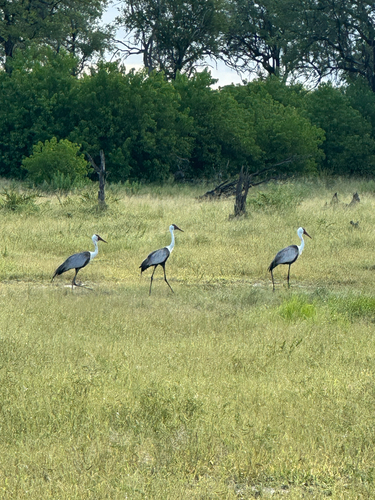
 Wattled Crane
Bugeranus carunculatus

African Finfoot
Podica senegalensis

 Grey Crowned Crane
Balearica regulorum
Global Distribution
Warmer areas are where this animal is recorded most often.
Parks Where Found
Quick answers
What are the chances of seeing a African Crake in Chobe National Park?
Under 5% of wildlife watchers report a African Crake sighting in Chobe National Park, based on 9 verified sightings from GBIF citizen-science data.
When is the best time to see African Crake in Chobe National Park?
January has the highest sighting rate for African Crake in Chobe National Park in our monthly data.