


White-nest Swiftlet
Aerodramus fuciphagus
- KingdomAnimalia (Animals)
- PhylumChordata (Chordates)
- ClassAves (Birds)
- OrderApodiformes (Swifts and Hummingbirds)
- FamilyApodidae (Swifts)
- GenusAerodramus (Dark Swiftlets)
- SpeciesAerodramus fuciphagus (White-nest Swiftlet)
About the White-nest Swiftlet
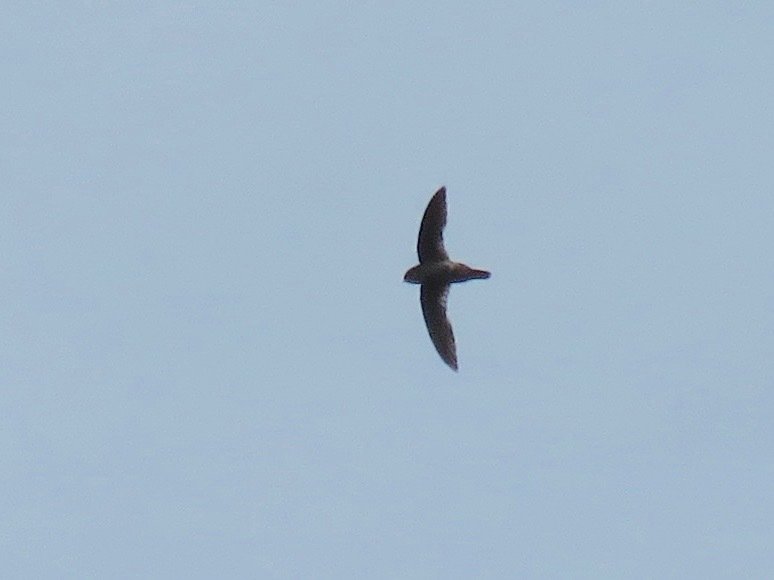
The edible-nest swiftlet (Aerodramus fuciphagus), also known as the white-nest swiftlet, is a small bird of the swift family which is found in Southeast Asia. Its opaque and whitish nest is made exclusively of solidified saliva and is the main ingredient of bird's nest soup, a delicacy of Chinese cuisine. Germain's swiftlet (Aerodramus germani) is now treated as conspecific with this species.
The edible-nest swiftlet was formally described in 1812 by the Swedish naturalist Carl Peter Thunberg under the binomial name Hirundo fuciphaga based on a specimen collected on the island of Java. The specific epithet fuciphaga combines the Ancient Greek φυκος/phukos meaning "seaweed" with -φαγος/-phagos meaning "-eating". The edible-nest swiftlet is now one of 25 swiftlets placed in the genus Aerodramus that was introduced in 1906 by the American ornithologist Harry C. Oberholser.
Eight subspecies are recognised: A. f. inexpectatus (Hume, 1873) – Andaman and Nicobar Islands A. f. vestitus (Lesson, RP, 1843) – Malay Peninsula (?introduced), Sumatra, Belitung (east of south Sumatra) and Borneo A. f. perplexus (Riley, 1927) – Maratua (east of northeast Borneo)
A. f. fuciphagus (Thunberg... Wikipedia →
Closest Relatives at Gunung Leuser National Park

Black-nest Swiftlet
Aerodramus maximus

Mossy-nest Swiftlet
Aerodramus salangana

Plume-toed Swiftlet
Collocalia affinis

Silver-rumped Needletail
Rhaphidura leucopygialis
Waterfall Swift
Hydrochous gigas

Brown-backed Needletail
Hirundapus giganteus

Pacific Swift
Apus pacificus

Asian Palm-Swift
Cypsiurus balasiensis

House Swift
Apus nipalensis

White-throated Needletail
Hirundapus caudacutus

Silver-backed Needletail
Hirundapus cochinchinensis

Gray-rumped Treeswift
Hemiprocne longipennis
Global Distribution
Where this species is recorded worldwide. Restricted to human observations from 2019 onwards — the same kind of record and the same period the probabilities on this page are built from, so collar-tracking studies, camera-trap arrays and museum specimens are excluded. Around Santa Rosa that removes 5,924 GPS fixes from a handful of tagged jaguars.
where this species is recorded (GBIF density — it tracks where observers go, not how likely a sighting is) · parks where it occurs — tap a pin for the sighting probability there
Parks Where Found
| # | Park | Country | Daily sighting probability |
|---|---|---|---|
| 1 | Cat Tien National Park | 🇻🇳 Vietnam | |
| 2 | Khao Luang National Park | 🇹🇭 Thailand | |
| 3 | Khao Sok National Park | 🇹🇭 Thailand | |
| 4 | Bali Barat National Park | 🇮🇩 Indonesia | |
| 5 | Tanjung Puting National Park | 🇮🇩 Indonesia | |
| 6 | Kaeng Krachan National Park | 🇹🇭 Thailand | |
| 7 | Kinabatangan Wildlife Sanctuary | 🇲🇾 Malaysia | |
| 8 | Way Kambas National Park | 🇮🇩 Indonesia | |
| 9 | Sepilok | 🇲🇾 Malaysia | |
| 10 | Taman Negara National Park | 🇲🇾 Malaysia | |
| 11 | Khao Yai National Park | 🇹🇭 Thailand | |
| 12 | Gunung Leuser National Park | 🇮🇩 Indonesia | |
| 13 | Bako National Park | 🇲🇾 Malaysia | |
| 14 | Kerinci Seblat National Park | 🇮🇩 Indonesia | |
| 15 | Danum Valley Conservation Area | 🇲🇾 Malaysia | |
| 16 | Kinabalu Park | 🇲🇾 Malaysia | |
| 17 | Doi Inthanon National Park | 🇹🇭 Thailand | |
| 18 | Tangkoko Nature Reserve | 🇮🇩 Indonesia |
Quick answers
What are the chances of seeing a White-nest Swiftlet in Gunung Leuser National Park?
About 10% of wildlife watchers report a White-nest Swiftlet sighting in Gunung Leuser National Park, based on 25 verified sightings from GBIF citizen-science data.
When is the best time to see White-nest Swiftlet in Gunung Leuser National Park?
July has the highest sighting rate for White-nest Swiftlet in Gunung Leuser National Park in our monthly data.