



Olive Whip Snake
Psammophis mossambicus
Silhouette: SeismicShrimp · PhyloPic
- KingdomAnimalia (Animals)
- PhylumChordata (Chordates)
- ClassSquamata
- FamilyPsammophiidae (Sand Snakes)
- GenusPsammophis (Sand Racers)
- SpeciesPsammophis mossambicus (Olive Whip Snake)
About the Olive Whip Snake
Psammophis mossambicus, the olive grass snake, is a snake species in the family Psammophiidae, the sand and whip snakes (not to be confused with the Australian olive whipsnake, Demansia olivacea). P. mossambicus is native to Southern Africa (Angola, Botswana, Eswatini, Malawi, Mozambique, Namibia, eastern South Africa, Zambia, Zimbabwe), but may also be found in Central African Republic, Democratic Republic of the Congo, Gabon, Kenya, South Sudan, Tanzania, and Uganda, and as far north as southern Chad.
This snake grows to 100 to 180 cm (roughly 3–5 feet) in length, and lives in somewhat moist places near a source of water. It is olive-brown in color, with dark-edged scales and a lighter-hued underside. It is often confused with the black mamba, as it can raise its head in a similar fashion to the mambas, cobras and other elapid snakes; however, unlike the aforementioned species, the olive grass snake is opisthoglyphous (rear-fanged), with small teeth located at the back of the mouth that deliver mild venom (and/or toxic salival compounds), primarily used for subduing small, slippery or "squirmy" prey such as frogs, lizards and some rodents. It... Wikipedia →
Recent sightings of Olive Whip Snake in Kruger National Park
LIVEiNaturalistClosest Relatives at Kruger National Park

 Stripe-bellied Sand Snake
Psammophis subtaeniatus

Dwarf Sand Snake
Psammophis angolensis

Cross-marked Grass Snake
Psammophis crucifer

Short-snouted Whip Snake
Psammophis brevirostris
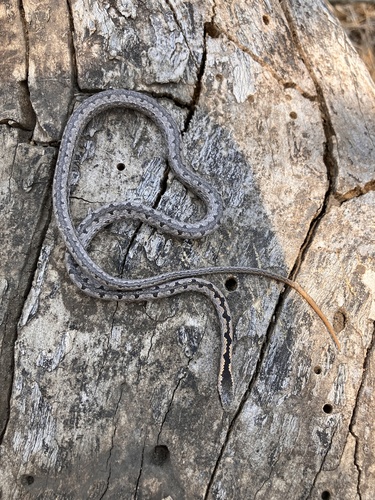
Eastern Bark Snake
Hemirhagerrhis nototaenia
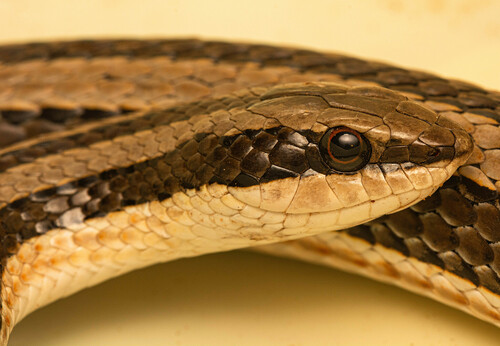
Three-lined Grass Snake
Psammophylax tritaeniatus

Rufous Beaked Snake
Rhamphiophis rostratus
Global Distribution
Warmer areas are where this animal is recorded most often.
Parks Where Found
| # | Park | Country | Daily sighting probability |
|---|---|---|---|
| 1 | Kruger National Park | 🇿🇦 South Africa | |
| 2 | iSimangaliso Wetland Park | 🇿🇦 South Africa | |
| 3 | Etosha National Park | 🇳🇦 Namibia | |
| 4 | Serengeti National Park | 🇹🇿 Tanzania | |
| 5 | Kafue National Park | 🇿🇲 Zambia | |
| 6 | Nairobi National Park | 🇰🇪 Kenya | |
| 7 | Lower Zambezi National Park | 🇿🇲 Zambia | |
| 8 | Mana Pools National Park | 🇿🇼 Zimbabwe | |
| 9 | Gonarezhou National Park | 🇿🇼 Zimbabwe | |
| 10 | Chobe National Park | 🇧🇼 Botswana | |
| 11 | South Luangwa National Park | 🇿🇲 Zambia | |
| 12 | Moremi Game Reserve | 🇧🇼 Botswana | |
| 13 | Hluhluwe-Imfolozi Park | 🇿🇦 South Africa | |
| 14 | Masai Mara National Reserve | 🇰🇪 Kenya | |
| 15 | Tsavo West National Park | 🇰🇪 Kenya | |
| 16 | Queen Elizabeth National Park | 🇺🇬 Uganda | |
| 17 | Tarangire National Park | 🇹🇿 Tanzania | |
| 18 | Tsavo East National Park | 🇰🇪 Kenya | |
| 19 | Virunga National Park | 🇨🇩 Democratic Republic of the Congo |
Quick answers
What are the chances of seeing a Olive Whip Snake in Kruger National Park?
About 10% of wildlife watchers report a Olive Whip Snake sighting in Kruger National Park, based on 55 verified sightings from GBIF citizen-science data.
When is the best time to see Olive Whip Snake in Kruger National Park?
February has the highest sighting rate for Olive Whip Snake in Kruger National Park in our monthly data.