
Australasian Bushlark
Mirafra javanica
Silhouette: Gossipguy and T. Michael Keesey · PhyloPic
- KingdomAnimalia (Animals)
- PhylumChordata (Chordates)
- ClassAves (Birds)
- OrderPasseriformes (Perching Birds)
- FamilyAlaudidae (Larks)
- GenusMirafra
- SpeciesMirafra javanica (Australasian Bushlark)
About the Australasian Bushlark
The singing bush lark or Horsfield's bush lark (Mirafra javanica) is a species of lark which inhabits grassland throughout most of Australia and much of Southeast Asia. It was described by the American naturalist Thomas Horsfield.
The singing bush lark was formally described in 1821 by the American naturalist Thomas Horsfield from a specimen collected on the island of Java. He placed the lark in the genus Mirafra and coined the binomial name Mirafra javanica.
The singing bush lark is one of 100 species of larks of the rather large and fairly diverse family, Alaudidae. They are small to medium-small passerines, usually with rather drab, brownish plumage. Predominantly an Old World family, the species are distributed widely across Europe, Africa, Asia and the Indian subcontinent but the singing bush lark is the only species occurring naturally in Wallacea, New Guinea and Australia.
The alternate shortened name "bush-lark" can also refer to many of the other species in the genus Mirafra. The alternate name of "cinnamon bush lark" is also an alternate name for the flappet lark. Other alternate names for the singing bush lark include the Australasian bushlark, Australian lark... Wikipedia →
Recent sightings of Australasian Bushlark in Ngorongoro Conservation Area
LIVEiNaturalistClosest Relatives at Ngorongoro Conservation Area

 White-tailed Lark
Mirafra albicauda

Latakoo Lark
Mirafra cheniana

 Fischer's Sparrow-Lark
Eremopterix leucopareia

Red-capped Lark
Calandrella cinerea

Fawn-colored Lark
Calendulauda africanoides

Short-tailed Lark
Pseudalaemon fremantlii
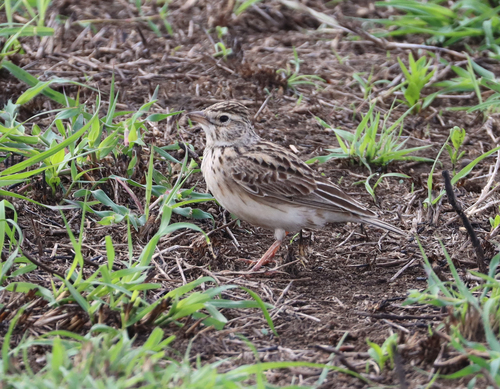
Somali Short-toed Lark
Calandrella somalica

 Chestnut-backed Sparrow-Lark
Eremopterix leucotis

Pink-breasted Lark
Calendulauda poecilosterna

 Superb Starling
Lamprotornis superbus

 Common Bulbul
Pycnonotus barbatus

 Rufous-tailed Weaver
Histurgops ruficauda
Global Distribution
Warmer areas are where this animal is recorded most often.
Parks Where Found
Quick answers
What are the chances of seeing a Australasian Bushlark in Ngorongoro Conservation Area?
Under 5% of wildlife watchers report a Australasian Bushlark sighting in Ngorongoro Conservation Area, based on 12 verified sightings from GBIF citizen-science data.
When is the best time to see Australasian Bushlark in Ngorongoro Conservation Area?
April has the highest sighting rate for Australasian Bushlark in Ngorongoro Conservation Area in our monthly data.