

Black Jungle-Frog
Leptodactylus melanonotus
Silhouette: Jose Carlos Arenas-Monroy · PhyloPic
- KingdomAnimalia (Animals)
- PhylumChordata (Chordates)
- ClassAmphibia (Amphibians)
- OrderAnura (Frogs and Toads)
- FamilyLeptodactylidae (Southern Frogs)
- GenusLeptodactylus (Neotropical Grass Frogs)
- SpeciesLeptodactylus melanonotus (Black Jungle-Frog)
About the Black Jungle-Frog
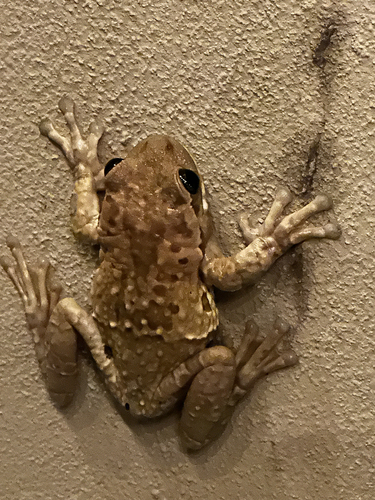
Leptodactylus melanonotus, known commonly as the Sabinal Frog, is a species of frog in the family Leptodactylidae. It is found along coasts and in inland wetlands in Central America and northern South America. The first description of the species was published in 1861 by Edward Hallowell, who placed it in the genus Cystignathus; a genus later determined to be a synonym of Leptodactylus, but Paul Brocchi had already moved melanonotus there in 1881, long before synonymization.
L. melanotus is part of a species group bearing its name, and its closest relatives are L. colombiensis, L. validus and L. wagneri. Average snout–vent length is about 46 mm (1.8 in) in males and 50 mm (2.0 in) in females. L. melanotus digs burrows and builds nest out of bubbles for its eggs. If the burrow fails to flood or becomes too dry, the female frog will dig a channel to a nearby body of water.
It is a nocturnal species. L. melanotus can be found in Mexico, along the west and east coasts and on the Yucatán Peninsula, Belize, Guatemala, Honduras, El Salvador, Nicaragua, including on Mancarroncito Island, Costa Rica, Panama and along... Wikipedia →
Recent sightings of Black Jungle-Frog in Palo Verde National Park
LIVEiNaturalistClosest Relatives at Palo Verde National Park

 Mexican White-lipped Frog
Leptodactylus fragilis

 Guayaquil Dwarf Frog
Engystomops pustulosus

 Stauffer's Tree Frog
Scinax staufferi

Mexican Smilisca
Smilisca baudinii

 Giant Marine Toad
Rhinella horribilis

Yellow Treefrog
Dendropsophus microcephalus
 Milk Frog
Trachycephalus macrotis

 Sheep Frog
Hypopachus variolosus

 Yellow Toad
Incilius luetkenii

 Mexican Burrowing Toad
Rhinophrynus dorsalis

 Forrer's Grass Frog
Lithobates forreri

Dry Forest Toad
Incilius coccifer
Global Distribution
Warmer areas are where this animal is recorded most often.
Parks Where Found
| # | Park | Country | Daily sighting probability |
|---|---|---|---|
| 1 | Tenorio Volcano National Park | 🇨🇷 Costa Rica | |
| 2 | Palo Verde National Park | 🇨🇷 Costa Rica | |
| 3 | Calakmul Biosphere Reserve | 🇲🇽 Mexico | |
| 4 | Braulio Carrillo National Park | 🇨🇷 Costa Rica | |
| 5 | La Amistad International Park (Panama) | 🇵🇦 Panama | |
| 6 | Celestún Biosphere Reserve | 🇲🇽 Mexico | |
| 7 | Tortuguero National Park | 🇨🇷 Costa Rica | |
| 8 | Gandoca-Manzanillo Wildlife Refuge | 🇨🇷 Costa Rica | |
| 9 | Sian Ka'an Biosphere Reserve | 🇲🇽 Mexico | |
| 10 | Santa Rosa National Park | 🇨🇷 Costa Rica | |
| 11 | Bastimentos Island National Marine Park | 🇵🇦 Panama | |
| 12 | Montes Azules Biosphere Reserve | 🇲🇽 Mexico | |
| 13 | Arenal Volcano National Park | 🇨🇷 Costa Rica | |
| 14 | Carara National Park | 🇨🇷 Costa Rica | |
| 15 | Cañón del Sumidero National Park | 🇲🇽 Mexico | |
| 16 | Monteverde Cloud Forest Reserve | 🇨🇷 Costa Rica |
Quick answers
What are the chances of seeing a Black Jungle-Frog in Palo Verde National Park?
About 20% of wildlife watchers report a Black Jungle-Frog sighting in Palo Verde National Park, based on 7 verified sightings from GBIF citizen-science data.
When is the best time to see Black Jungle-Frog in Palo Verde National Park?
October has the highest sighting rate for Black Jungle-Frog in Palo Verde National Park in our monthly data.