


Mexican White-lipped Frog
Leptodactylus fragilis
Silhouette: Jose Carlos Arenas-Monroy · PhyloPic
- KingdomAnimalia (Animals)
- PhylumChordata (Chordates)
- ClassAmphibia (Amphibians)
- OrderAnura (Frogs and Toads)
- FamilyLeptodactylidae (Southern Frogs)
- GenusLeptodactylus (Neotropical Grass Frogs)
- SpeciesLeptodactylus fragilis (Mexican White-lipped Frog)
About the Mexican White-lipped Frog
Leptodactylus fragilis, known under many common names such as the Mexican white-lipped frog, American white-lipped frog or simply white-lipped frog, is a species of leptodactylid frog. Its distribution ranges from the Lower Rio Grande Valley of Texas in the United States south through Mexico and Central America to Colombia and Venezuela. It is often—wrongly—referred to as Leptodactylus labialis (Cope, 1878) (or Leptodactylus mystaceus labialis Shreve, 1957), which is a junior synonym of Leptodactylus mystacinus.
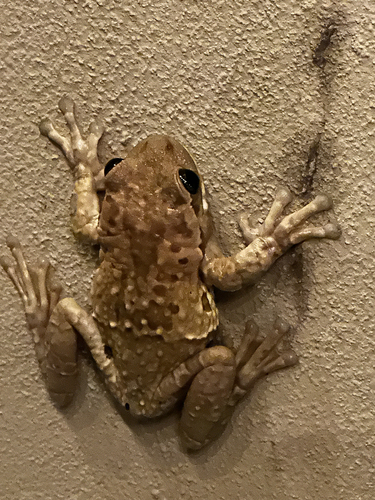
Mexican white-lipped frogs are grey-brown in color with brown or black mottling. They have a distinctive white stripe along their upper lip which gives them their name. They grow to 3–5 cm (1.2–2.0 in) in length. Mexican white-lipped frog is a widespread and common species found in a range of habitats, in savanna, grassland, semi-arid lands, and open habitats in humid and dry, lowland and montane tropical forests. It is often seen near water. Scientists have observed it as high as 1,530 metres (5,020 ft) above sea level.
Mexican white-lipped frogs are nocturnal and carnivorous. During the heat of the day, they... Wikipedia →
Recent sightings of Mexican White-lipped Frog in Palo Verde National Park
LIVEiNaturalistClosest Relatives at Palo Verde National Park

 Black Jungle-Frog
Leptodactylus melanonotus

 Guayaquil Dwarf Frog
Engystomops pustulosus

 Stauffer's Tree Frog
Scinax staufferi

Mexican Smilisca
Smilisca baudinii

 Giant Marine Toad
Rhinella horribilis

Yellow Treefrog
Dendropsophus microcephalus
 Milk Frog
Trachycephalus macrotis

 Sheep Frog
Hypopachus variolosus

 Yellow Toad
Incilius luetkenii

 Mexican Burrowing Toad
Rhinophrynus dorsalis

 Forrer's Grass Frog
Lithobates forreri

Dry Forest Toad
Incilius coccifer
Global Distribution
Warmer areas are where this animal is recorded most often.
Parks Where Found
| # | Park | Country | Daily sighting probability |
|---|---|---|---|
| 1 | Palo Verde National Park | 🇨🇷 Costa Rica | |
| 2 | Soberanía National Park | 🇵🇦 Panama | |
| 3 | Santa Rosa National Park | 🇨🇷 Costa Rica | |
| 4 | La Amistad International Park (Panama) | 🇵🇦 Panama | |
| 5 | Marino Ballena National Park | 🇨🇷 Costa Rica | |
| 6 | Lago de Yojoa | 🇭🇳 Honduras | |
| 7 | Bastimentos Island National Marine Park | 🇵🇦 Panama | |
| 8 | Coiba National Park | 🇵🇦 Panama | |
| 9 | Cabo Blanco Absolute Nature Reserve | 🇨🇷 Costa Rica | |
| 10 | Tikal National Park | 🇬🇹 Guatemala | |
| 11 | Chagres National Park | 🇵🇦 Panama | |
| 12 | Corcovado National Park | 🇨🇷 Costa Rica | |
| 13 | Manuel Antonio National Park | 🇨🇷 Costa Rica | |
| 14 | Calakmul Biosphere Reserve | 🇲🇽 Mexico | |
| 15 | Parque Natural Metropolitano | 🇵🇦 Panama | |
| 16 | Sian Ka'an Biosphere Reserve | 🇲🇽 Mexico | |
| 17 | Darién National Park | 🇵🇦 Panama |
Quick answers
What are the chances of seeing a Mexican White-lipped Frog in Palo Verde National Park?
About 20% of wildlife watchers report a Mexican White-lipped Frog sighting in Palo Verde National Park, based on 8 verified sightings from GBIF citizen-science data.
When is the best time to see Mexican White-lipped Frog in Palo Verde National Park?
August has the highest sighting rate for Mexican White-lipped Frog in Palo Verde National Park in our monthly data.