

African Penduline-Tit
Anthoscopus caroli
Silhouette: Sheatherius · PhyloPic
- KingdomAnimalia (Animals)
- PhylumChordata (Chordates)
- ClassAves (Birds)
- OrderPasseriformes (Perching Birds)
- FamilyRemizidae (Penduline-Tits)
- GenusAnthoscopus (African Penduline-Tits)
- SpeciesAnthoscopus caroli (African Penduline-Tit)
About the African Penduline-Tit
The grey penduline tit (Anthoscopus caroli), also known as the African penduline-tit, is a species of bird in the family Remizidae. It is found in Angola, Botswana, Burundi, Republic of the Congo, Democratic Republic of the Congo, Eswatini, Kenya, Malawi, Mozambique, Namibia, Rwanda, South Africa, Tanzania, Uganda, Zambia, and Zimbabwe. Its natural habitats are subtropical or tropical dry forests, dry savanna, and moist savanna. At 8 to 9 cm (3.1 to 3.5 in) in length and a weight of 6.5 g (0.23 oz), it is one of the smallest species of bird found in Africa, along with its cousin the Cape penduline tit and the perhaps smaller mouse-colored penduline tit and the tit hylia.
The grey penduline tit was formally described in 1871 by the English ornithologist Richard Bowdler Sharpe from a specimen that had been collected in the Ovaquenyama or Oukwanyama district of Damaraland. This is now northern Namibia. Sharpe coined the binomial name Aegithalus caroli. This tit is now placed in the genus Anthoscopus that was introduced in 1851 by the German ornithologist Jean Cabanis. The genus name combines the Ancient Greek anthos meaning "blossom" or "flower" with skopos meaning "searcher... Wikipedia →
Recent sightings of African Penduline-Tit in Queen Elizabeth National Park
LIVEiNaturalistClosest Relatives at Queen Elizabeth National Park

 Black-headed Gonolek
Laniarius erythrogaster

 Rüppell's Glossy-starling
Lamprotornis purpuroptera

 Common Bulbul
Pycnonotus barbatus

 Grey-backed Fiscal
Lanius excubitoroides

Yellow-throated Longclaw
Macronyx croceus

 Pin-tailed Whydah
Vidua macroura

Red-billed Firefinch
Lagonosticta senegala

 White-browed Robin-Chat
Cossypha heuglini

Black-headed Weaver
Ploceus melanocephalus
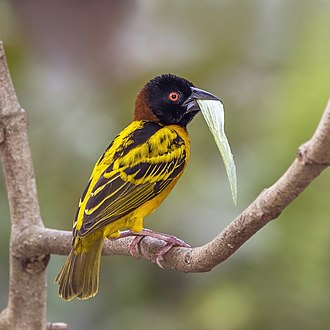
Village Weaver
Ploceus cucullatus

 Northern Grey-headed Sparrow
Passer griseus

Northern Black-Flycatcher
Melaenornis edolioides
Global Distribution
Warmer areas are where this animal is recorded most often.
Parks Where Found
Quick answers
What are the chances of seeing a African Penduline-Tit in Queen Elizabeth National Park?
Under 5% of wildlife watchers report a African Penduline-Tit sighting in Queen Elizabeth National Park, based on 6 verified sightings from GBIF citizen-science data.
When is the best time to see African Penduline-Tit in Queen Elizabeth National Park?
August has the highest sighting rate for African Penduline-Tit in Queen Elizabeth National Park in our monthly data.