


Budgerigar
Melopsittacus undulatus
- KingdomAnimalia (Animals)
- PhylumChordata (Chordates)
- ClassAves (Birds)
- OrderPsittaciformes (Parrots)
- FamilyPsittacidae (New World and African Parrots)
- GenusMelopsittacus (Budgerigars)
- SpeciesMelopsittacus undulatus (Budgerigar)
About the Budgerigar
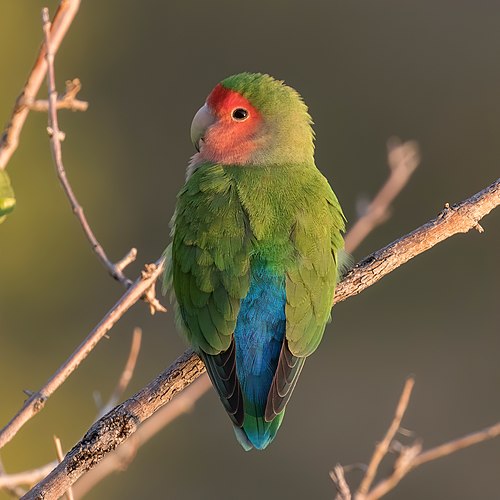
The budgerigar ( BUJ-ər-ih-gar, -ə-ree-; Melopsittacus undulatus), also known as the common parakeet, shell parakeet or budgie ( BUJ-ee), is a small, long-tailed, seed-eating parrot native to Australia. Naturally, the species is green and yellow with black, scalloped markings on the nape, back, and wings. Budgies are bred in captivity with colouring of blues, whites, yellows, greys, and even with small crests. Juveniles and chicks are monomorphic (the sexes are visually indistinguishable), while adults are told apart by their cere colouring and their behaviour.
The species is monotypic, meaning it is the only member of the genus Melopsittacus, which is the only genus in the tribe Melopsittacini. The budgerigar is closely related to lories and the fig parrots. The origin of the budgerigar's name is unclear. First recorded in 1805, budgerigars are popular pets around the world due to their small size, low cost, and ability to mimic human speech. They are the third most popular pet in the world, after the domesticated dog and cat. Budgies are nomadic flock parakeets that have been bred in captivity since the 19th century. In both the wild and in captivity, budgerigars breed opportunistically and in pairs.
They are found wild throughout the drier parts of Australia, where they have survived harsh inland conditions for over five million years. Their success can be attributed to a nomadic lifestyle and their ability to breed while on the move. Wikipedia →
Closest Relatives at Saguaro National Park

Global Distribution
Where this species is recorded worldwide. Restricted to human observations from 2019 onwards — the same kind of record and the same period the probabilities on this page are built from, so collar-tracking studies, camera-trap arrays and museum specimens are excluded. Around Santa Rosa that removes 5,924 GPS fixes from a handful of tagged jaguars.
where this species is recorded (GBIF density — it tracks where observers go, not how likely a sighting is) · parks where it occurs — tap a pin for the sighting probability there
Parks Where Found
Quick answers
What are the chances of seeing a Budgerigar in Saguaro National Park?
Under 5% of wildlife watchers report a Budgerigar sighting in Saguaro National Park, based on 8 verified sightings from GBIF citizen-science data.
When is the best time to see Budgerigar in Saguaro National Park?
October has the highest sighting rate for Budgerigar in Saguaro National Park in our monthly data.