


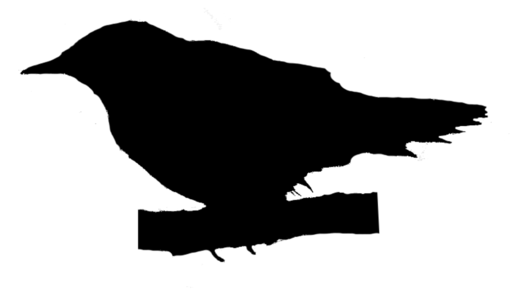
Grasshopper Warbler
Locustella naevia
Silhouette: Afsarnayakkan · PhyloPic
- KingdomAnimalia (Animals)
- PhylumChordata (Chordates)
- ClassAves (Birds)
- OrderPasseriformes (Perching Birds)
- FamilyLocustellidae (Grassbirds and Allies)
- GenusLocustella (Locustellid Bush Warblers and Allies)
- SpeciesLocustella naevia (Grasshopper Warbler)
About the Grasshopper Warbler
The common grasshopper warbler or just grasshopper warbler (Locustella naevia) is a species of Old World warbler in the genus Locustella. It breeds across much of temperate Europe and the western Palearctic. It is migratory, wintering across northern tropical Africa just south of the Sahara, and also locally in India.
This small passerine bird is found in dense grassland vegetation, often close to water, and usually with a few small scattered shrubs. It is a medium-sized warbler about 13 cm (5 in) long. The adult has a streaked brown back and whitish grey underparts which are unstreaked except on the undertail coverts. The sexes are identical, as with most warblers, but young birds are yellower below. Like most warblers, it is insectivorous. Four to seven eggs are laid in a nest on or near the ground in thick vegetation or in a tussock of grass.
This is a species which skulks in the undergrowth, creeping through bushes and low foliage, and which is very difficult to see except when singing from a prominent position. The song, which gives this species its name, is a mechanical grasshopper-like reeling, often given at dawn or dusk.
The Italian naturalist Ulisse Aldrovandi... Wikipedia →
Recent sightings of Grasshopper Warbler in Snowdonia National Park
LIVEiNaturalistClosest Relatives at Snowdonia National Park

 European Robin
Erithacus rubecula

 Carrion Crow
Corvus corone

 Eurasian Blackbird
Turdus merula

 Blue Tit
Cyanistes caeruleus

 Great Tit
Parus major

 Eurasian Magpie
Pica pica

 Chaffinch
Fringilla coelebs

 Eurasian Wren
Troglodytes troglodytes

 Dunnock
Prunella modularis

 Eurasian Goldfinch
Carduelis carduelis

 White Wagtail
Motacilla alba

 Common Chiffchaff
Phylloscopus collybita
Global Distribution
Warmer areas are where this animal is recorded most often.
Parks Where Found
| # | Park | Country | Daily sighting probability |
|---|---|---|---|
| 1 | Biebrza National Park | 🇵🇱 Poland | |
| 2 | Fertő-Hanság National Park | 🇭🇺 Hungary | |
| 3 | Białowieża National Park | 🇵🇱 Poland | |
| 4 | Kiskunság National Park | 🇭🇺 Hungary | |
| 5 | Hortobágy National Park | 🇭🇺 Hungary | |
| 6 | Snowdonia National Park | 🇬🇧 United Kingdom | |
| 7 | Wadden Sea National Park | 🇩🇪 Germany | |
| 8 | Bavarian Forest National Park | 🇩🇪 Germany | |
| 9 | Camargue | 🇫🇷 France | |
| 10 | Cairngorms National Park | 🇬🇧 United Kingdom | |
| 11 | Pyrénées National Park | 🇫🇷 France | |
| 12 | Monfragüe National Park | 🇪🇸 Spain | |
| 13 | Ecrins National Park | 🇫🇷 France | |
| 14 | Ordesa y Monte Perdido National Park | 🇪🇸 Spain | |
| 15 | Gauja National Park | 🇱🇻 Latvia | |
| 16 | Vanoise National Park | 🇫🇷 France | |
| 17 | Doñana National Park | 🇪🇸 Spain | |
| 18 | Sierra Nevada National Park | 🇪🇸 Spain | |
| 19 | Sierra de Guadarrama National Park | 🇪🇸 Spain |
Quick answers
What are the chances of seeing a Grasshopper Warbler in Snowdonia National Park?
Under 5% of wildlife watchers report a Grasshopper Warbler sighting in Snowdonia National Park, based on 52 verified sightings from GBIF citizen-science data.
When is the best time to see Grasshopper Warbler in Snowdonia National Park?
April has the highest sighting rate for Grasshopper Warbler in Snowdonia National Park in our monthly data.