



Thrush Nightingale
Luscinia luscinia
Silhouette: Stephan Sprinz · PhyloPic
- KingdomAnimalia (Animals)
- PhylumChordata (Chordates)
- ClassAves (Birds)
- OrderPasseriformes (Perching Birds)
- FamilyMuscicapidae (Old World Flycatchers, Robins, and Chats)
- GenusLuscinia (Nightingales and Allies)
- SpeciesLuscinia luscinia (Thrush Nightingale)
About the Thrush Nightingale
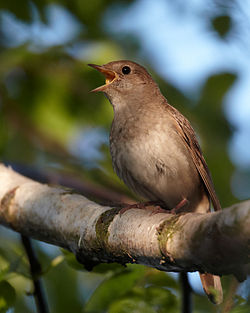
The thrush nightingale (Luscinia luscinia), also known as the sprosser, is a small passerine bird in the Old World flycatcher family. It is a migratory species breeding in forests in Europe and the Palearctic and overwintering in Africa. An insectivore, it nests near the ground in dense undergrowth. Its distribution is more northerly than the very closely related common nightingale (Luscinia megarhynchos), which it closely resembles in appearance. Hybrids between the two have occurred in areas where their ranges overlap.
The thrush nightingale is similar in size to the European robin. Sexes are similar, both being plain greyish-brown above and white and greyish-brown below. Its greyer tones, giving a cloudy appearance to the underside, and lack of the common nightingale's obvious rufous tail side patches are the clearest plumage differences from that species. It also has a similar but somewhat more solemn song than that of L. megarhynchos. The nightingales, and similar small European species, are often called chats.
The thrush nightingale belongs to a distinctive group of Old World flycatchers, known as chats, that were formerly thought to be thrushes. It was formally... Wikipedia →
Recent sightings of Thrush Nightingale in Tsavo West National Park
LIVEiNaturalistClosest Relatives at Tsavo West National Park

 Common Nightingale
Luscinia megarhynchos

 White-browed Scrub Robin
Erythropygia leucophrys

Spotted Morning-Thrush
Cichladusa guttata

 Spotted Flycatcher
Muscicapa striata

African Gray Flycatcher
Bradornis microrhynchus

Rufous-tailed Rock-Thrush
Monticola saxatilis

 Northern Wheatear
Oenanthe oenanthe

 African Stonechat
Saxicola torquatus

White-starred Robin
Pogonocichla stellata

Southern Black Flycatcher
Melaenornis pammelaina

African Dusky Flycatcher
Muscicapa adusta

 Pied Wheatear
Oenanthe pleschanka
Global Distribution
Warmer areas are where this animal is recorded most often.
Parks Where Found
Quick answers
What are the chances of seeing a Thrush Nightingale in Tsavo West National Park?
About 10% of wildlife watchers report a Thrush Nightingale sighting in Tsavo West National Park, based on 114 verified sightings from GBIF citizen-science data.
When is the best time to see Thrush Nightingale in Tsavo West National Park?
December has the highest sighting rate for Thrush Nightingale in Tsavo West National Park in our monthly data.