

Desert Rainbow Skink
Carlia triacantha
Silhouette: David Orr · PhyloPic
- KingdomAnimalia (Animals)
- PhylumChordata (Chordates)
- ClassSquamata
- FamilyScincidae (Skinks)
- GenusCarlia (Rainbow Skinks)
- SpeciesCarlia triacantha (Desert Rainbow Skink)
About the Desert Rainbow Skink
The desert rainbow-skink (Carlia triacantha) is an Australian skink in the genus Carlia, commonly known as four-fingered skinks, from the subfamily Lygosominae. It is native to desert woodland regions throughout most of the Northern Territory, the north of Western Australia, and the far north-west of South Australia. It was originally classified as Leiolopisma triacantha, and is sometimes known as the three-spined rainbow-skink.
The desert rainbow-skink is on average 5.3 centimetres (2.1 in) long, excluding the tail. It is characterised by three keels or spines on the dorsal scales. It is typically a mid-brown to grey-brown colour with less pigmentation on the ventral surface, but males display extra colouration, particularly during breeding season.
Desert rainbow-skinks shelter in woodland leaf litter, feeding mainly on invertebrates. Their large eyes help them to see their prey in the dim lighting of the leaf litter, and the eyes are covered by an eyelid with a transparent window that protects the eye while burrowing in the litter.
The desert rainbow-skink is an egg-laying or oviparous reptile. It has an average clutch size of two eggs. During... Wikipedia →
Recent sightings of Desert Rainbow Skink in Uluru-Kata Tjuta National Park
LIVEiNaturalistClosest Relatives at Uluru-Kata Tjuta National Park

 Leopard Ctenotus
Ctenotus pantherinus

Centralian Bluetongue
Tiliqua multifasciata

Leonhardi's Ctenotus
Ctenotus leonhardii
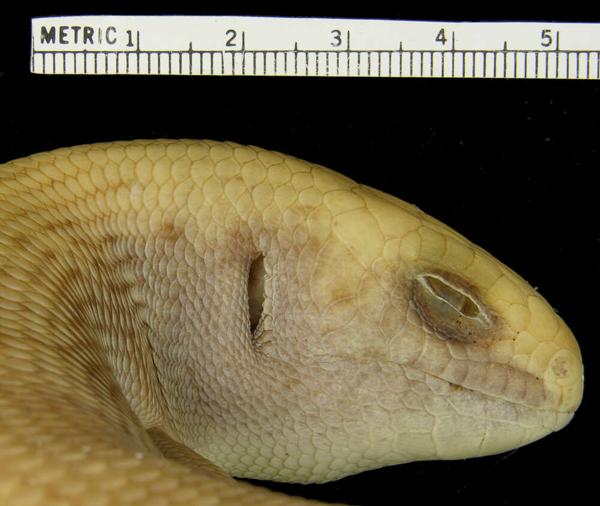
Great Desert Skink
Liopholis kintorei

Shiny-palmed Shining-skink
Cryptoblepharus australis
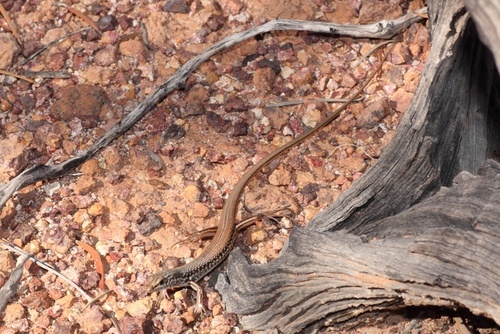
Massive-gibber Ctenotus
Ctenotus septenarius
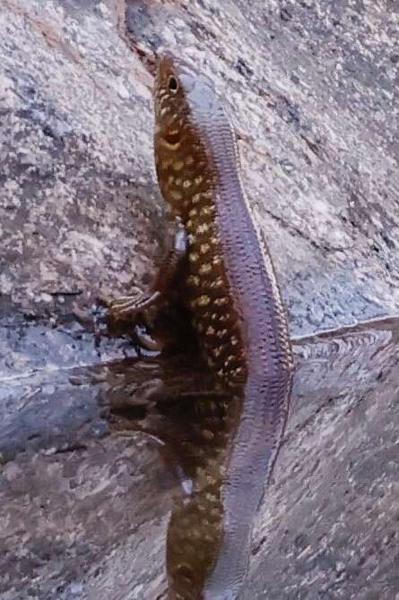
Grand Ctenotus
Ctenotus grandis
Wedgesnout Ctenotus
Ctenotus brooksi
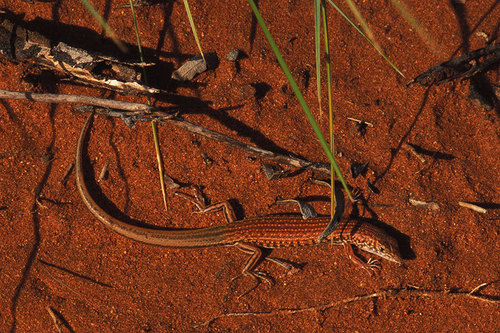
Fine Side-lined Ctenotus
Ctenotus dux

Clay-soil Ctenotus
Ctenotus helenae

Blue-tailed Finesnout Ctenotus
Ctenotus calurus
Fourteen-lined Ctenotus
Ctenotus quattuordecimlineatus
Global Distribution
Warmer areas are where this animal is recorded most often.
Parks Where Found
| # | Park | Country | Daily sighting probability |
|---|---|---|---|
| 1 | Uluru-Kata Tjuta National Park | 🇦🇺 Australia |
More parks will be added in future updates.
Quick answers
What are the chances of seeing a Desert Rainbow Skink in Uluru-Kata Tjuta National Park?
About 10% of wildlife watchers report a Desert Rainbow Skink sighting in Uluru-Kata Tjuta National Park, based on 5 verified sightings from GBIF citizen-science data.
When is the best time to see Desert Rainbow Skink in Uluru-Kata Tjuta National Park?
June has the highest sighting rate for Desert Rainbow Skink in Uluru-Kata Tjuta National Park in our monthly data.