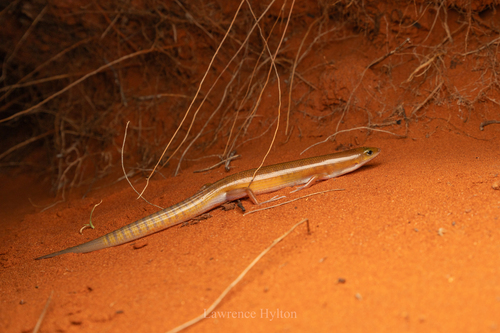

Ghost Skink
Eremiascincus phantasmus
Silhouette: Beth Reinke · PhyloPic
- KingdomAnimalia (Animals)
- PhylumChordata (Chordates)
- ClassSquamata
- FamilyScincidae (Skinks)
- GenusEremiascincus (Sand-swimmers)
- SpeciesEremiascincus phantasmus (Ghost Skink)
About the Ghost Skink
The ghost skink (Eremiascincus phantasmus) is a species of skink endemic to Australia. The Eremiascincus genus of skinks is characterised by their nocturnal and fossorial habit. These adaptations lead to them mostly inhabiting ecosystems consisting of loose substrate such as sand dunes and sandy plains. It is a nocturnal forager, consuming mostly insects. Skinks of this genus are referred to as 'sand-swimmers' referring to their ability to move easily through sand.
Eremiascincus mostly feed on insects such as moths, termites, beetles, grasshoppers, and spiders but they also consume some small reptile species such as geckos or smaller skinks. They are crepuscular or nocturnal foragers, and forage on the surface of loose substrates.
E. phantasmus is oviparous with clutch sizes ranging from 2-7 eggs. In 2013 Sven Mecke, Paul Doughty and Stephen Charles Donnellan examined variation in morphology of the Eremiascincus fasciolatus, providing clarification on four different species, and providing the description and clarification of diagnostic features for E. phantasmus as a distinct species.
Eric Worrell is thought to be the first author to use the colloquial... Wikipedia →
Recent sightings of Ghost Skink in Uluru-Kata Tjuta National Park
LIVEiNaturalistClosest Relatives at Uluru-Kata Tjuta National Park

 Leopard Ctenotus
Ctenotus pantherinus

Centralian Bluetongue
Tiliqua multifasciata

Leonhardi's Ctenotus
Ctenotus leonhardii
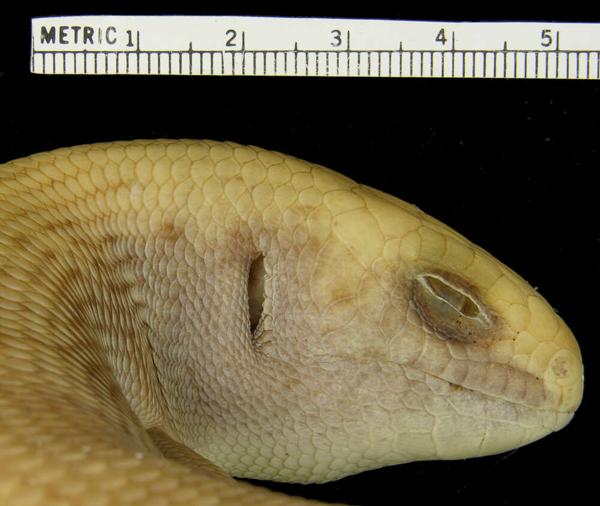
Great Desert Skink
Liopholis kintorei

Shiny-palmed Shining-skink
Cryptoblepharus australis
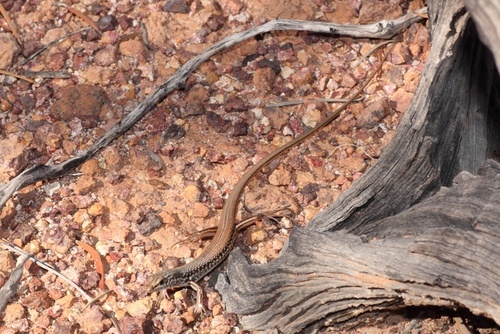
Massive-gibber Ctenotus
Ctenotus septenarius

Desert Rainbow Skink
Carlia triacantha
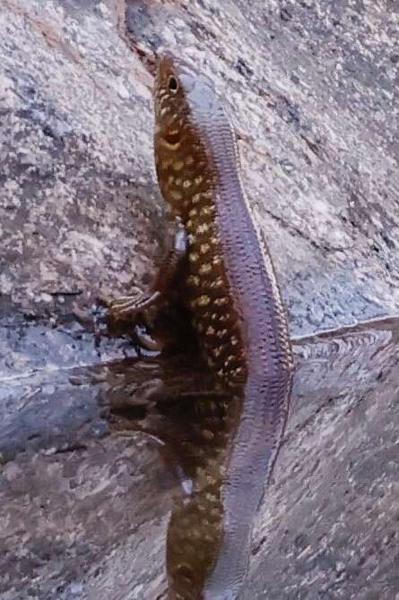
Grand Ctenotus
Ctenotus grandis
Wedgesnout Ctenotus
Ctenotus brooksi
Fine Side-lined Ctenotus
Ctenotus dux

Clay-soil Ctenotus
Ctenotus helenae

Blue-tailed Finesnout Ctenotus
Ctenotus calurus
Global Distribution
Warmer areas are where this animal is recorded most often.
Parks Where Found
| # | Park | Country | Daily sighting probability |
|---|---|---|---|
| 1 | Uluru-Kata Tjuta National Park | 🇦🇺 Australia |
More parks will be added in future updates.