



Puffing Snake
Phrynonax poecilonotus
Silhouette: Alex Slavenko · PhyloPic
- KingdomAnimalia (Animals)
- PhylumChordata (Chordates)
- ClassSquamata
- FamilyColubridae (Colubrid Snakes)
- GenusPhrynonax
- SpeciesPhrynonax poecilonotus (Puffing Snake)
About the Puffing Snake
Phrynonax poecilonotus is a species of nonvenomous snake in the family Colubridae. The species is endemic to the New World. P. poecilonotus is commonly known in Trinidad and Tobago as dos cocorite, in Brazil as papa-ovo, and in English as the puffing snake or the bird snake.
P. poecilonotus is found from Mexico through Central America to northern and central South America and Trinidad and Tobago. P. poecilonotus apparently eats any terrestrial vertebrate small enough to handle and is well known as a predator of bird eggs (hence some of the common names). In captivity, they are known to enjoy scrambled eggs.
P. poecilonotus is one of the most variable snakes in the world. For about the first year of their life, they look very dull in color, and look all the same upon hatching. During the first four years, the snake's appearance will change rapidly, from slate grey and yellow, to slate and orange, etc. Past the first four years of life, changes will be very slow, but they will still change in appearance. The snakes can be combinations of black with red, orange, yellow, and/or lavender, or slate and red, yellow, orange... Wikipedia →
Recent sightings of Puffing Snake in Cerro Azul Meámbar National Park
LIVEiNaturalistClosest Relatives at Cerro Azul Meámbar National Park

 Blunthead Tree Snake
Imantodes cenchoa

 Dryad Snake
Mastigodryas melanolomus
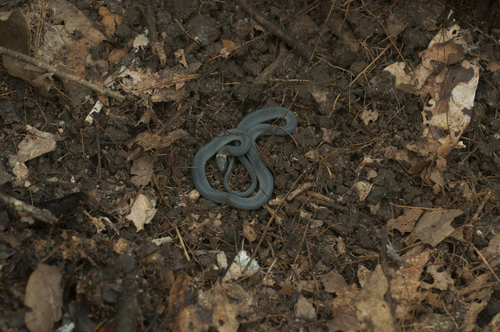
Ringneck Coffee Snake
Ninia diademata

Common Mussurana
Clelia clelia

False Fer-de-lance
Xenodon rabdocephalus

Red Coffee Snake
Ninia sebae

 Forest Flame Snake
Oxyrhopus petolarius

Speckled Racer
Drymobius margaritiferus

Sapper's Rustyhead Snake
Amastridium sapperi

Slender Snail Sucker
Sibon dimidiatus

 Central American Milksnake
Lampropeltis abnorma

Variegated False Coral Snake
Pliocercus elapoides
Global Distribution
Warmer areas are where this animal is recorded most often.