
Greater Short-toed Lark
Calandrella brachydactyla
Silhouette: Gossipguy and T. Michael Keesey · PhyloPic
- KingdomAnimalia (Animals)
- PhylumChordata (Chordates)
- ClassAves (Birds)
- OrderPasseriformes (Perching Birds)
- FamilyAlaudidae (Larks)
- GenusCalandrella (Calandrella Short-toed Larks)
- SpeciesCalandrella brachydactyla (Greater Short-toed Lark)
About the Greater Short-toed Lark
The greater short-toed lark (Calandrella brachydactyla) is a small passerine bird. The current scientific name is from Ancient Greek. The genus name, Calandrella, is a diminutive of kalandros, the calandra lark, and brachydactila is from brakhus, "short", and daktulos, "toe".
It breeds in southern Europe, north-west Africa, and across the Palearctic from Turkey and southern Russia to Mongolia. During migration they form large, tight flocks that move in unison; at other times they form loose flocks.
The greater short-toed lark was described by the German naturalist Johann Leisler in 1814 and given the binomial name Alauda brachydactila. This lark is now placed in the genus Calandrella that was established by another German naturalist, Johann Jakob Kaup, in 1829. The specific name brachydactyla is from the Ancient Greek βραχυδακτυλος brakhudaktulos "short-toed" from brakhus "short" and daktulos "toe". The alternate name short-toed lark may also be used for three other species in the genus Calandrella. The Mongolian short-toed lark was formerly considered as a subspecies of the greater short-toed lark (as C. b. dukhunensis) until split in 2016 by the IOC... Wikipedia →
Recent sightings of Greater Short-toed Lark in Gobi Gurvansaikhan National Park
LIVEiNaturalistClosest Relatives at Gobi Gurvansaikhan National Park

 Mediterranean Short-toed Lark
Calandrella rufescens

 Horned Lark
Eremophila alpestris

Asian Short-toed Lark
Alaudala cheleensis

Crested Lark
Galerida cristata

Skylark
Alauda arvensis
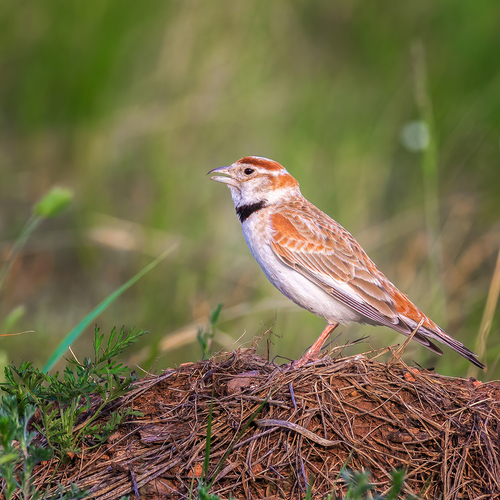
Mongolian Lark
Melanocorypha mongolica

 Isabelline Wheatear
Oenanthe isabellina

 Isabelline Shrike
Lanius isabellinus

 Eurasian Tree Sparrow
Passer montanus

Desert Wheatear
Oenanthe deserti

 Common Raven
Corvus corax

 White-winged Snowfinch
Montifringilla nivalis
Global Distribution
Warmer areas are where this animal is recorded most often.
Parks Where Found
| # | Park | Country | Daily sighting probability |
|---|---|---|---|
| 1 | Doñana National Park | 🇪🇸 Spain | |
| 2 | Monfragüe National Park | 🇪🇸 Spain | |
| 3 | Ranthambore National Park | 🇮🇳 India | |
| 4 | Wadden Sea National Park | 🇩🇪 Germany | |
| 5 | Gobi Gurvansaikhan National Park | 🇲🇳 Mongolia | |
| 6 | Mudumalai National Park | 🇮🇳 India | |
| 7 | Chitwan National Park | 🇳🇵 Nepal | |
| 8 | Pyrénées National Park | 🇫🇷 France | |
| 9 | Keoladeo National Park | 🇮🇳 India | |
| 10 | Sierra de Guadarrama National Park | 🇪🇸 Spain | |
| 11 | Cévennes National Park | 🇫🇷 France | |
| 12 | Camargue | 🇫🇷 France | |
| 13 | Manas National Park | 🇮🇳 India | |
| 14 | Satpura National Park | 🇮🇳 India | |
| 15 | Yala National Park | 🇱🇰 Sri Lanka | |
| 16 | Kanha National Park | 🇮🇳 India | |
| 17 | Sierra Nevada National Park | 🇪🇸 Spain |
Quick answers
What are the chances of seeing a Greater Short-toed Lark in Gobi Gurvansaikhan National Park?
Under 5% of wildlife watchers report a Greater Short-toed Lark sighting in Gobi Gurvansaikhan National Park, based on 14 verified sightings from GBIF citizen-science data.
When is the best time to see Greater Short-toed Lark in Gobi Gurvansaikhan National Park?
July has the highest sighting rate for Greater Short-toed Lark in Gobi Gurvansaikhan National Park in our monthly data.