


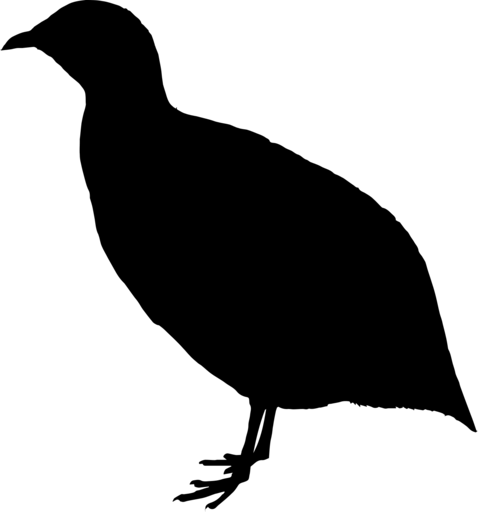
Barred Buttonquail
Turnix suscitator
Silhouette: PhyloPic · PhyloPic
- KingdomAnimalia (Animals)
- PhylumChordata (Chordates)
- ClassAves (Birds)
- OrderCharadriiformes (Shorebirds and Allies)
- FamilyTurnicidae (Buttonquails)
- GenusTurnix (Buttonquail)
- SpeciesTurnix suscitator (Barred Buttonquail)
About the Barred Buttonquail
The barred buttonquail or common bustard-quail (Turnix suscitator) is a species of buttonquail, one of a small family (Turnicidae) of birds which resemble, but are not closely related to, the true quails. This species is resident from India across tropical Asia to south China, Indonesia and the Philippines.
The barred buttonquail was formally described in 1789 by the German naturalist Johann Friedrich Gmelin in his revised and expanded edition of Carl Linnaeus's Systema Naturae. He placed it with the grouse like birds in the genus Tetrao and coined the binomial name Tetrao suscitator. Gmelin cited the English ornithologist Francis Willughby who in 1678 had described and illustrated the "Indian Quail of Brontius" from the Island of Java. The barred buttonquail is now placed in the genus Turnix that was introduced in 1791 by French naturalist in Pierre Bonnaterre. The genus name is an abbreviation of the genus Coturnix. The specific epithet suscitator is Latin and means "awakening".
Sixteen subspecies are recognised. T. s. plumbipes (Hodgson, 1837) – Nepal to northeast India and north Myanmar T. s. bengalensis Blyth, 1852 – central, southwest Bengal (northeast India)... Wikipedia →
Recent sightings of Barred Buttonquail in Komodo National Park
LIVEiNaturalistClosest Relatives at Komodo National Park

 Crested Tern
Thalasseus bergii

 Black-naped Tern
Sterna sumatrana

 Red-necked Phalarope
Phalaropus lobatus

 Common Sandpiper
Actitis hypoleucos

 Beach Thick-knee
Esacus magnirostris

 Bridled Tern
Onychoprion anaethetus

 Whimbrel
Numenius phaeopus

Lesser Crested Tern
Thalasseus bengalensis

Common Tern
Sterna hirundo

 Brown Noddy
Anous stolidus

Little Tern
Sternula albifrons

Roseate Tern
Sterna dougallii
Global Distribution
Warmer areas are where this animal is recorded most often.