


Whimbrel
Numenius phaeopus
- KingdomAnimalia (Animals)
- PhylumChordata (Chordates)
- ClassAves (Birds)
- OrderCharadriiformes (Shorebirds and Allies)
- FamilyScolopacidae (Sandpipers and Allies)
- GenusNumenius (Curlews)
- SpeciesNumenius phaeopus (Whimbrel)
About the Whimbrel
The Eurasian whimbrel (Numenius phaeopus), historically known as the white-rumped whimbrel in North America, is a wader in the large family Scolopacidae. It is one of the most widespread of the curlews, breeding across much of subarctic Palearctic region and Europe as far south as Scotland. This species and the Hudsonian whimbrel were split in 2019, although some taxonomic authorities still consider them to be conspecific.
The Eurasian whimbrel was formally described by Carl Linnaeus in 1758 in the tenth edition of his Systema Naturae under the binomial name Scolopax phaeopus. It is now placed with the curlews in the genus Numenius that was introduced by Mathurin Jacques Brisson in 1760.
The genus name Numenius is from Ancient Greek noumenios, a bird mentioned by Hesychius. It is associated with the curlews because it appears to be derived from neos, "new" and mene, "moon", referring to the crescent-shaped bill. The specific epithet phaeopus is the Medieval Latin name for the bird, from Ancient Greek phaios, "dusky" and pous, "foot". The English name "whimbrel" is imitative of the bird's call.
Five subspecies are recognised: N. p. phaeopus (Linnaeus, 1758) – nominate... Wikipedia →
Closest Relatives at Komodo National Park

Red-necked Phalarope
Phalaropus lobatus
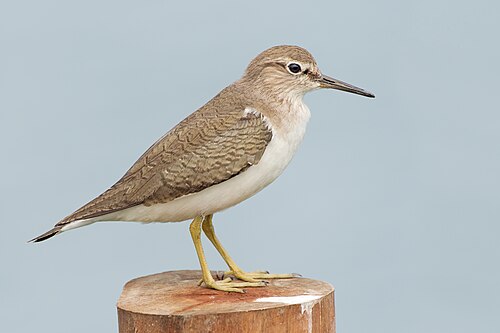
Common Sandpiper
Actitis hypoleucos

Sanderling
Calidris alba

Ruddy Turnstone
Arenaria interpres

Wood Sandpiper
Tringa glareola

Crested Tern
Thalasseus bergii

Black-naped Tern
Sterna sumatrana

Beach Thick-knee
Esacus magnirostris

Bridled Tern
Onychoprion anaethetus

Lesser Crested Tern
Thalasseus bengalensis

Common Tern
Sterna hirundo

Brown Noddy
Anous stolidus
Global Distribution
Where this species is recorded worldwide. Restricted to human observations from 2019 onwards — the same kind of record and the same period the probabilities on this page are built from, so collar-tracking studies, camera-trap arrays and museum specimens are excluded. Around Santa Rosa that removes 5,924 GPS fixes from a handful of tagged jaguars.
where this species is recorded (GBIF density — it tracks where observers go, not how likely a sighting is) · parks where it occurs — tap a pin for the sighting probability there
Parks Where Found
Quick answers
What are the chances of seeing a Whimbrel in Komodo National Park?
About 10% of wildlife watchers report a Whimbrel sighting in Komodo National Park, based on 26 verified sightings from GBIF citizen-science data.
When is the best time to see Whimbrel in Komodo National Park?
April has the highest sighting rate for Whimbrel in Komodo National Park in our monthly data.