


Barred Cuckoo-Dove
Macropygia unchall
- KingdomAnimalia (Animals)
- PhylumChordata (Chordates)
- ClassAves (Birds)
- OrderColumbiformes (Pigeons and Doves)
- FamilyColumbidae (Pigeons and Doves)
- GenusMacropygia (Typical Cuckoo-Doves)
- SpeciesMacropygia unchall (Barred Cuckoo-Dove)
About the Barred Cuckoo-Dove
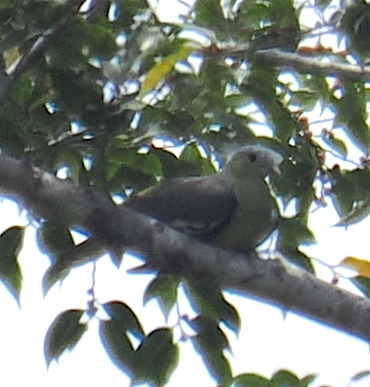
The barred cuckoo-dove (Macropygia unchall) is a bird species in the family Columbidae. It is native to South and Southeast Asia, and listed as Least Concern on the IUCN Red List. German herpetologist Johann Georg Wagler first described the barred cuckoo-dove in 1827. It has three recognized subspecies:
M. u. tusalia (Blyth, 1843) M. u. minor (Swinhoe, 1870) M. u. unchall (Wagler, 1827) The barred cuckoo-dove has a buff coloured throat and forehead which becomes pinkish grey at the crown. measures 37 to 41 cm (15 to 16 in) in length, and weighs 153 to 182 g (5.4 to 6.4 oz). Its iris is yellow or pale brown, the beak is black and short, and the feet are red. It has blackish brown upperparts. The back, mantle (between the nape and the starting of the back), rump, wing coverts, and scapulars have reddish brown fringes. The tail is blackish brown, and is heavily barred reddish brown.
It is similar to the little cuckoo-dove, but it is much larger and darker, and is black-barred on the mantle, breast, coverts, and tail. The barred cuckoo-dove occurs from the Himalayas to Southeast Asia. It inhabits dense subtropical woodlands... Wikipedia →
Closest Relatives at Komodo National Park

Ruddy Cuckoo-Dove
Macropygia emiliana

Barred Dove
Geopelia maugeus

Green Imperial-Pigeon
Ducula aenea

Spotted Dove
Spilopelia chinensis

Island Collared Dove
Streptopelia bitorquata

Pied Imperial Pigeon
Ducula bicolor

Asian Emerald Dove
Chalcophaps indica
Flores Green-Pigeon
Treron floris

Black-naped Fruit-Dove
Ptilinopus melanospilus

Pink-necked Green-Pigeon
Treron vernans
Global Distribution
Where this species is recorded worldwide. Restricted to human observations from 2019 onwards — the same kind of record and the same period the probabilities on this page are built from, so collar-tracking studies, camera-trap arrays and museum specimens are excluded. Around Santa Rosa that removes 5,924 GPS fixes from a handful of tagged jaguars.
where this species is recorded (GBIF density — it tracks where observers go, not how likely a sighting is) · parks where it occurs — tap a pin for the sighting probability there
Parks Where Found
| # | Park | Country | Daily sighting probability |
|---|---|---|---|
| 1 | Kerinci Seblat National Park | 🇮🇩 Indonesia | |
| 2 | Khao Yai National Park | 🇹🇭 Thailand | |
| 3 | Khangchendzonga National Park | 🇮🇳 India | |
| 4 | Royal Manas National Park | 🇧🇹 Bhutan | |
| 5 | Manas National Park | 🇮🇳 India | |
| 6 | Namdapha National Park | 🇮🇳 India | |
| 7 | Doi Inthanon National Park | 🇹🇭 Thailand | |
| 8 | Gunung Leuser National Park | 🇮🇩 Indonesia | |
| 9 | Langtang National Park | 🇳🇵 Nepal | |
| 10 | Chitwan National Park | 🇳🇵 Nepal | |
| 11 | Cat Tien National Park | 🇻🇳 Vietnam | |
| 12 | Kaeng Krachan National Park | 🇹🇭 Thailand |
Quick answers
What are the chances of seeing a Barred Cuckoo-Dove in Komodo National Park?
Under 5% of wildlife watchers report a Barred Cuckoo-Dove sighting in Komodo National Park, based on 7 verified sightings from GBIF citizen-science data.
When is the best time to see Barred Cuckoo-Dove in Komodo National Park?
June has the highest sighting rate for Barred Cuckoo-Dove in Komodo National Park in our monthly data.