


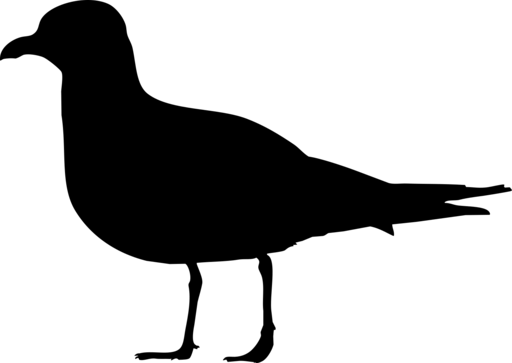
Ring-billed Gull
Larus delawarensis
Silhouette: Jason Dilworth · PhyloPic
- KingdomAnimalia (Animals)
- PhylumChordata (Chordates)
- ClassAves (Birds)
- OrderCharadriiformes (Shorebirds and Allies)
- FamilyLaridae (Gulls, Terns, and Skimmers)
- GenusLarus (Large White-headed Gulls)
- SpeciesLarus delawarensis (Ring-billed Gull)
About the Ring-billed Gull
The ring-billed gull (Larus delawarensis) is a medium-sized gull native to North America, breeding in Canada and the northern Contiguous United States, and wintering mainly in the United States and northern Mexico. The genus name is from Latin Larus which appears to have referred to a gull or other large seabird. The specific delawarensis refers to the Delaware River.
The ring-billed gull is a medium-sized gull, having an average length of 43 to 54 centimetres (16.9 to 21.3 in) and a wingspan that ranges from 105 to 117 centimetres (41.3 to 46.1 in). Adults weigh from 300 to 700 grams (10.6 to 24.7 oz).
The head, neck and underparts are white; the relatively short bill is yellow with a black ring; the back and wings are silver grey with black wingtips with white 'mirrors'; and the legs are yellow. The eyes are yellow with red rims. This gull takes three years to reach its breeding plumage starting with the largely brown juvenile plumage, its appearance changing with each fall moult.
The average lifespan of an individual that reaches adulthood is 10.9 years. The oldest ring-billed gull on record was observed in Cleveland in 2021, still alive at the age of 28 years... Wikipedia →
Recent sightings of Ring-billed Gull in Los Haitises National Park
LIVEiNaturalistClosest Relatives at Los Haitises National Park

 Lesser Black-backed Gull
Larus fuscus

 Royal Tern
Thalasseus maximus

 Caspian Tern
Hydroprogne caspia

 Sandwich Tern
Thalasseus sandvicensis

 Common Tern
Sterna hirundo

 Killdeer
Charadrius vociferus

 Spotted Sandpiper
Actitis macularius

 Short-billed Dowitcher
Limnodromus griseus

 Solitary Sandpiper
Tringa solitaria

 Black-necked Stilt
Himantopus mexicanus

 Greater Yellowlegs
Tringa melanoleuca

 Black-bellied Plover
Pluvialis squatarola
Global Distribution
Warmer areas are where this animal is recorded most often.