


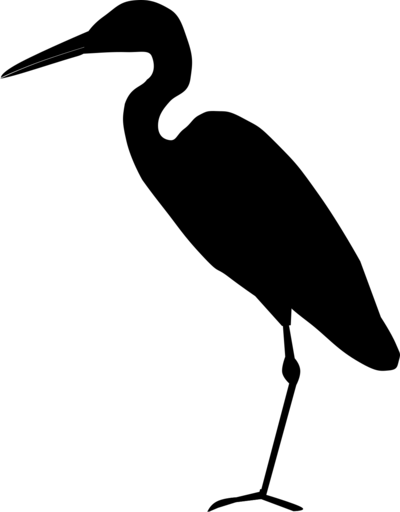
Black Heron
Egretta ardesiaca
Silhouette: L. Shyamal · PhyloPic
- KingdomAnimalia (Animals)
- PhylumChordata (Chordates)
- ClassAves (Birds)
- OrderPelecaniformes (Pelicans, Herons, Ibises, and Allies)
- FamilyArdeidae (Herons, Egrets, and Bitterns)
- GenusEgretta (Small Egrets and Herons)
- SpeciesEgretta ardesiaca (Black Heron)
About the Black Heron
The black heron (Egretta ardesiaca), also known as the black egret, is an African heron. It uses its wings to form a canopy when fishing. The black heron is a medium-sized bird, with a typical height range of 42.5 to 66 cm (16.7 to 26.0 in). Their weight can range from 0.27 to 0.39 kg (0.60 to 0.86 lb). They are known for their black plumage, black bill, and yellow feet. In breeding plumage it grows long plumes on the crown and nape.
The black heron occurs patchily through Sub-Saharan Africa, from Senegal and Sudan to South Africa, but is found mainly on the eastern half of the continent and in Madagascar. It has also been observed in Greece and Italy.
It prefers shallow open waters, such as the edges of freshwater lakes and ponds. It may also be found in marshes, river edges, rice fields, and seasonally flooded grasslands. In coastal areas, it may be found feeding along tidal rivers and creeks, in alkaline lakes, and tidal flats.
The black heron uses a hunting method called canopy feeding — it uses its wings like an umbrella, creating shade that attracts fish. This technique was documented on episode 5 of the BBC's The... Wikipedia →
Recent sightings of Black Heron in Masai Mara National Reserve
LIVEiNaturalistClosest Relatives at Masai Mara National Reserve

 Little Egret
Egretta garzetta

intermediate egret
Egretta intermedia

 Black-headed Heron
Ardea melanocephala

 Grey Heron
Ardea cinerea

Cattle Egret
Bubulcus ibis

 Striated Heron
Butorides striata

 Great Egret
Ardea alba

 Rufous-bellied Heron
Ardeola rufiventris

 Goliath Heron
Ardea goliath

Madagascar Pond Heron
Ardeola idae

 Black-crowned Night Heron
Nycticorax nycticorax

Squacco Heron
Ardeola ralloides
Global Distribution
Warmer areas are where this animal is recorded most often.