



Indian Paradise-Flycatcher
Terpsiphone paradisi
Silhouette: PhyloPic · PhyloPic
- KingdomAnimalia (Animals)
- PhylumChordata (Chordates)
- ClassAves (Birds)
- OrderPasseriformes (Perching Birds)
- FamilyMonarchidae (Monarch Flycatchers)
- GenusTerpsiphone (Paradise-Flycatchers)
- SpeciesTerpsiphone paradisi (Indian Paradise-Flycatcher)
About the Indian Paradise-Flycatcher
The Indian paradise flycatcher (Terpsiphone paradisi) is a medium-sized passerine bird in the monarch flycatcher family, Monarchidae. As the global population is considered stable, it has been listed as Least Concern on the IUCN Red List since 2004. It is native to the Indian subcontinent, with resident and breeding populations in most of Bangladesh, India and Sri Lanka, as well as parts of Afghanistan, Bhutan, China, Myanmar, Nepal, Pakistan, Tajikistan and Turkmenistan.
The Indian paradise flycatcher has a length of 20–50 cm (7.9–19.7 in) from beak to tail. Males have elongated central tail feathers, and a black and rufous plumage in some populations, while others have white plumage. Females are short-tailed with rufous wings and a black head. Indian paradise flycatchers feed on insects, including grasshoppers, butterflies and praying mantises, as well as flies. The Indian paradise flycatcher typically captures prey in the air, kills it by hitting it on a rock, and then extracts the inner parts. often below a densely canopied tree.
The Indian paradise flycatcher was formally described in 1758 by the Swedish naturalist Carl Linnaeus in the tenth edition of his Systema... Wikipedia →
Recent sightings of Indian Paradise-Flycatcher in Minneriya National Park
LIVEiNaturalistClosest Relatives at Minneriya National Park

 Black-naped Monarch
Hypothymis azurea

 Indian Robin
Saxicoloides fulicatus

Purple-rumped Sunbird
Leptocoma zeylonica

 Black-hooded Oriole
Oriolus xanthornus
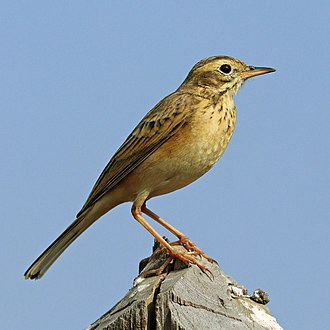
 Oriental Pipit
Anthus rufulus

 Large-billed Crow
Corvus macrorhynchos

 Yellow-billed Babbler
Turdoides affinis

Common Iora
Aegithina tiphia

Common Tailorbird
Orthotomus sutorius

Oriental Magpie-Robin
Copsychus saularis

 Pale-billed Flowerpecker
Dicaeum erythrorhynchos

 Barn Swallow
Hirundo rustica
Global Distribution
Warmer areas are where this animal is recorded most often.
Parks Where Found
Quick answers
What are the chances of seeing a Indian Paradise-Flycatcher in Minneriya National Park?
About 20% of wildlife watchers report a Indian Paradise-Flycatcher sighting in Minneriya National Park, based on 52 verified sightings from GBIF citizen-science data.
When is the best time to see Indian Paradise-Flycatcher in Minneriya National Park?
April has the highest sighting rate for Indian Paradise-Flycatcher in Minneriya National Park in our monthly data.