


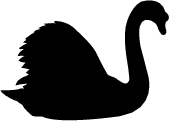
Mute Swan
Cygnus olor
Silhouette: An Ignorant Atheist · PhyloPic
- KingdomAnimalia (Animals)
- PhylumChordata (Chordates)
- ClassAves (Birds)
- OrderAnseriformes (Waterfowl)
- FamilyAnatidae (Ducks, Geese, and Swans)
- GenusCygnus (True Swans)
- SpeciesCygnus olor (Mute Swan)
About the Mute Swan
The mute swan (Cygnus olor) is a species of swan and a member of the family Anatidae within the waterfowl order. It is native to much of Europe and parts of Asia and (as a rare winter visitor) the far north of Africa. It is an introduced species in North America, home to the largest populations outside of its native range, with additional smaller introductions in Australasia and Southern Africa. The name "mute" derives from it being less vocal than other swan species. Typically measuring 140 to 160 cm (55 to 63 in) in length, this large swan is wholly white in plumage, with an orange beak bordered with black. It is recognisable by its pronounced knob atop the beak, which is larger in males.
The mute swan was first formally named by the German naturalist Johann Friedrich Gmelin as Anas olor in 1789 and was transferred by Johann Matthäus Bechstein to the new genus Cygnus in 1803. Both cygnus and olor mean 'swan' in Latin; cygnus is a variant form of cycnus, borrowing from Greek κύκνος kyknos, a word of the same meaning.
Despite its Eurasian origin, its closest relatives are the black swan of Australia and the black-necked swan of South America, not the other Northern Hemisphere... Wikipedia →
Recent sightings of Mute Swan in Monfragüe National Park
LIVEiNaturalistClosest Relatives at Monfragüe National Park

 Mallard
Anas platyrhynchos

 Egyptian Goose
Alopochen aegyptiaca

 Gadwall
Mareca strepera

 Ferruginous Duck
Aythya nyroca

Common Teal
Anas crecca

 Northern Shoveler
Spatula clypeata

 Greylag Goose
Anser anser

 Eurasian Wigeon
Mareca penelope

 Muscovy Duck
Cairina moschata

 Common Shelduck
Tadorna tadorna

Red-crested Pochard
Netta rufina

Northern Pintail
Anas acuta
Global Distribution
Warmer areas are where this animal is recorded most often.