



Jamaican Fruit-eating Bat
Artibeus jamaicensis
Silhouette: Jorge D. Carballo-Morales, based on a photo by Mario Barroso · PhyloPic
- KingdomAnimalia (Animals)
- PhylumChordata (Chordates)
- ClassMammalia (Mammals)
- OrderChiroptera (Bats)
- FamilyPhyllostomidae (New World Leaf-nosed Bats)
- GenusArtibeus (Neotropical Fruit Bats)
- SpeciesArtibeus jamaicensis (Jamaican Fruit-eating Bat)
About the Jamaican Fruit-eating Bat
The Jamaican fruit bat (Artibeus jamaicensis) is a frugivorous bat species native to the Neotropics. The Jamaican fruit bat is a medium-sized bat, having a total length of 78–89 mm (3.1–3.5 in) with a 96–150 mm (3.8–5.9 in) wingspan and weighing 40 to 60 g (1.4 to 2.1 oz). It has broad but pointed and ridged ears with a serrated tragus. Its prominent noseleaf has an array of sebaceous glands. The lower lip is littered with warts with a relatively large one in the center. Sebaceous holocrine glands can be found in both lips. On the back the fur is an ashy-shade of gray or brown with visible white hair bases and variable fur patterning on the face. The wings of the fruit bat are broad and dark gray in color. The underfur is paler in color. The fruit bat has no external tail. It has broad dark grey wings and a narrow hairless interfemoral membrane with a short calcar. The distinctive features of the Jamaican fruit bat (which however are shared by some of its relatives) include the absence of an external tail and a minimal, U-shaped interfemoral membrane.
A transcriptome dataset is available with more than 25,000 annotated transcripts that are directly searchable by... Wikipedia →
Recent sightings of Jamaican Fruit-eating Bat in Montes Azules Biosphere Reserve
LIVEiNaturalistClosest Relatives at Montes Azules Biosphere Reserve
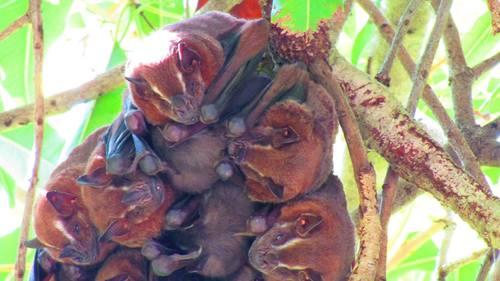
 Great Fruit-eating Bat
Artibeus lituratus

Pygmy Fruit Eating Bat
Artibeus phaeotis

 Big-eared Woolly Bat
Chrotopterus auritus

 Heller's Broad-nosed Bat
Platyrrhinus helleri

Cozumelan Golden Bat
Mimon cozumelae

Common Big-eared Bat
Micronycteris microtis

Tomes's Sword-nosed Bat
Lonchorhina aurita

Northern Yellow-shouldered Bat
Sturnira parvidens

 fringe-lipped bat
Trachops cirrhosus

Northern Little Yellow-eared Bat
Vampyressa thyone
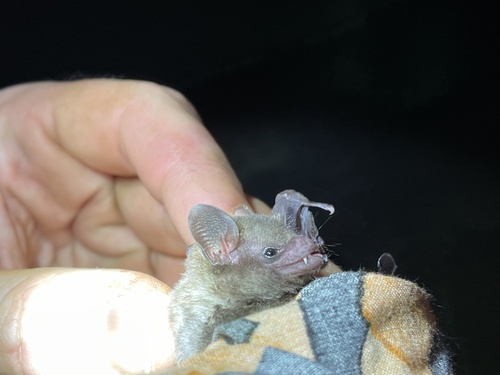
Godman's long-tailed bat
Choeroniscus godmani

Great Stripe-faced Bat
Vampyrodes major
Global Distribution
Warmer areas are where this animal is recorded most often.
Parks Where Found
Quick answers
What are the chances of seeing a Jamaican Fruit-eating Bat in Montes Azules Biosphere Reserve?
About 20% of wildlife watchers report a Jamaican Fruit-eating Bat sighting in Montes Azules Biosphere Reserve, based on 21 verified sightings from GBIF citizen-science data.
When is the best time to see Jamaican Fruit-eating Bat in Montes Azules Biosphere Reserve?
November has the highest sighting rate for Jamaican Fruit-eating Bat in Montes Azules Biosphere Reserve in our monthly data.