
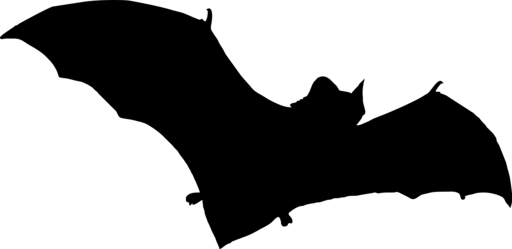
Vampire Bat
Desmodus rotundus
Silhouette: Roberto Díaz Sibaja · PhyloPic
- KingdomAnimalia (Animals)
- PhylumChordata (Chordates)
- ClassMammalia (Mammals)
- OrderChiroptera (Bats)
- FamilyPhyllostomidae (New World Leaf-nosed Bats)
- GenusDesmodus
- SpeciesDesmodus rotundus (Vampire Bat)
About the Vampire Bat
The common vampire bat (Desmodus rotundus) is a small, leaf-nosed bat native to the Americas. It is one of three extant species of vampire bats, the other two being the hairy-legged and the white-winged vampire bats. The common vampire bat practices hematophagy, mainly feeding on the blood of livestock. The bat usually approaches its prey at night while they are sleeping. It then uses its razor-sharp teeth to cut open the skin of its hosts and lap up their blood with its long tongue. The species is highly polygynous, and dominant adult males defend groups of females. It is one of the most social of bat species with a number of cooperative behaviors such as social grooming and food sharing. Because it feeds on livestock and is a carrier of rabies, the common vampire bat is considered a pest. Its conservation status is categorized as least concern by the International Union for Conservation of Nature because of "its wide distribution, presumed large population tolerance of a degree of habitat modification, and because it is unlikely to be declining at nearly the rate required to qualify for listing in a threatened category."
The common vampire bat was first described... Wikipedia →
Recent sightings of Vampire Bat in Monteverde Cloud Forest Reserve
LIVEiNaturalistClosest Relatives at Monteverde Cloud Forest Reserve

 Jamaican Fruit-eating Bat
Artibeus jamaicensis

 wrinkle-faced bat
Centurio senex

Greater Broad-nosed Bat
Platyrrhinus vittatus
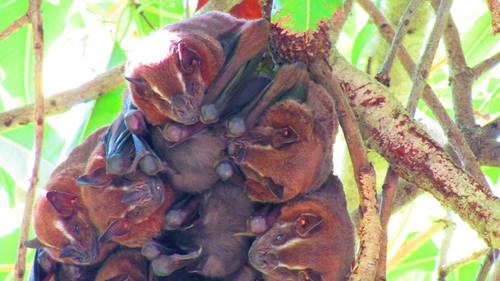
Great Fruit-eating Bat
Artibeus lituratus

Toltec Fruit Eating Bat
Artibeus toltecus

White Bat
Ectophylla alba

 Pallas's Long-tongued Bat
Glossophaga soricina

Underwood's long-tongued bat
Hylonycteris underwoodi

Heller's Broad-nosed Bat
Platyrrhinus helleri

Geoffroy's tailless bat
Anoura geoffroyi

Common tent-making Bat
Uroderma bilobatum

chestnut short-tailed bat
Carollia castanea
Global Distribution
Warmer areas are where this animal is recorded most often.
Parks Where Found
Quick answers
What are the chances of seeing a Vampire Bat in Monteverde Cloud Forest Reserve?
About 10% of wildlife watchers report a Vampire Bat sighting in Monteverde Cloud Forest Reserve, based on 9 verified sightings from GBIF citizen-science data.
When is the best time to see Vampire Bat in Monteverde Cloud Forest Reserve?
May has the highest sighting rate for Vampire Bat in Monteverde Cloud Forest Reserve in our monthly data.