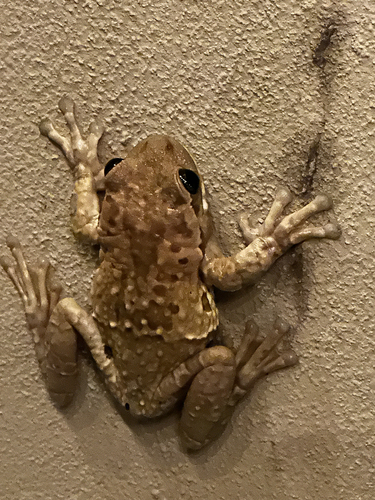

Milk Frog
Trachycephalus macrotis
Silhouette: Lauren McLean · PhyloPic
- KingdomAnimalia (Animals)
- PhylumChordata (Chordates)
- ClassAmphibia (Amphibians)
- OrderAnura (Frogs and Toads)
- FamilyHylidae (Hylid Tree Frogs)
- GenusTrachycephalus (Golden-eyed Tree Frogs)
- SpeciesTrachycephalus macrotis (Milk Frog)
About the Milk Frog
Trachycephalus macrotis, also known as the Amazonian milk frog and known in Spanish as rana lechera de Pastaza, is a frog in the family Hylidae. It is endemic to Peru and Ecuador. It has been observed between 225 and 925 m above sea level.
The adult male frog measures 69.8 to 91.5 mm in snout-vent length and the adult female frog 93.9 to 118.7 mm. Its head is wider than it is long. It has bronze-colored skin with coffee-colored marks. It has some webbing on its feet and relatively small climbing disks on its toes.
This species was split from the taxon T. typhonius. This nocturnal frog lives in submontane tropical forests, especially primary forest, near streams. However, it has also been spotted near plantations, roads, and human habitation. This frog has been observed between 225 and 925 metres (738 and 3,035 ft) above sea level.
This frog engages in explosive breeding after heavy rain. The male frog floats in a temporary body of water and calls to the female. The eggs float on the water, in which the tadpoles later swim and develop. The IUCN classifies this frog as least concern of extinction because of... Wikipedia →
Recent sightings of Milk Frog in Ostional Wildlife Refuge
LIVEiNaturalistClosest Relatives at Ostional Wildlife Refuge

 Mexican Smilisca
Smilisca baudinii

Stauffer's Tree Frog
Scinax staufferi

Yellow Treefrog
Dendropsophus microcephalus

Masked Tree Frog
Smilisca phaeota

Boulenger's Snouted Tree Frog
Scinax boulengeri

 Giant Marine Toad
Rhinella horribilis

 Yellow Toad
Incilius luetkenii

 Savage's Thin-toed Frog
Leptodactylus savagei

Dry Forest Toad
Incilius coccifer

 Sheep Frog
Hypopachus variolosus

Turbo White-lipped Frog
Leptodactylus poecilochilus

 Fitzinger's Robber Frog
Craugastor fitzingeri
Global Distribution
Warmer areas are where this animal is recorded most often.
Parks Where Found
Quick answers
What are the chances of seeing a Milk Frog in Ostional Wildlife Refuge?
About 30% of wildlife watchers report a Milk Frog sighting in Ostional Wildlife Refuge, based on 18 verified sightings from GBIF citizen-science data.
When is the best time to see Milk Frog in Ostional Wildlife Refuge?
September has the highest sighting rate for Milk Frog in Ostional Wildlife Refuge in our monthly data.