

Eurasian Nuthatch
Sitta europaea
- KingdomAnimalia (Animals)
- PhylumChordata (Chordates)
- ClassAves (Birds)
- OrderPasseriformes (Perching Birds)
- FamilySittidae (Nuthatches)
- GenusSitta (Nuthatches)
- SpeciesSitta europaea (Eurasian Nuthatch)
About the Eurasian Nuthatch
The Eurasian nuthatch, wood nuthatch (Sitta europaea), or simply nuthatch, is a small passerine bird found throughout the Palearctic and in Europe. Like other nuthatches, it is a short-tailed bird with a long bill, blue-gray upperparts and a black eye-stripe. It is a vocal bird with a repeated loud dwip call. There are more than 20 subspecies in three main groups; birds in the west of the range have orange-buff underparts and a white throat, those in Russia have whitish underparts, and those in the east have a similar appearance to European birds, but lack the white throat.
Its preferred habitat is mature deciduous or mixed woodland with large, old trees, preferably oak. Pairs hold permanent territories, and nest in tree holes, usually old woodpecker nests, but sometimes natural cavities. If the entrance to the hole is too large, the female plasters it with mud to reduce its size, and often coats the inside of the cavity too. The six to nine red-speckled white eggs are laid on a deep base of pine or other wood chips.
The Eurasian nuthatch eats mainly insects, particularly caterpillars and beetles, although in autumn and winter its diet is supplemented with nuts and seeds. The young are fed mainly on insects, with some seeds, food items mainly being found on tree trunks and large branches. The nuthatch can forage when descending trees head first, as well as when climbing. It readily visits bird tables, eating fatty man-made food items as well as seeds. It is an inveterate hoarder, storing food year-round. Its main natural predator is the Eurasian sparrowhawk.
Fragmentation of woodland can lead to local losses of breeding birds, but the species's range is still expanding. It has a large population and huge breeding area, and is therefore classified by the International Union for Conservation of Nature (IUCN) as being of least concern. Wikipedia →
Closest Relatives at Plitvice Lakes National Park

Western Rock Nuthatch
Sitta neumayer

Chaffinch
Fringilla coelebs

Great Tit
Parus major

Eurasian Blackbird
Turdus merula

European Robin
Erithacus rubecula

Marsh Tit
Poecile palustris

Blackcap
Sylvia atricapilla

Common Chiffchaff
Phylloscopus collybita

Song Thrush
Turdus philomelos

Grey Wagtail
Motacilla cinerea

Eurasian Jay
Garrulus glandarius
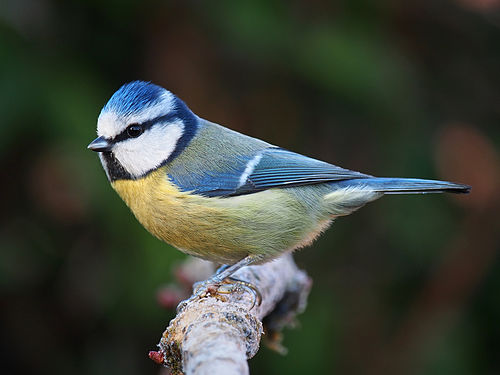
Blue Tit
Cyanistes caeruleus
Global Distribution
Where this species is recorded worldwide. Restricted to human observations from 2019 onwards — the same kind of record and the same period the probabilities on this page are built from, so collar-tracking studies, camera-trap arrays and museum specimens are excluded. Around Santa Rosa that removes 5,924 GPS fixes from a handful of tagged jaguars.
where this species is recorded (GBIF density — it tracks where observers go, not how likely a sighting is) · parks where it occurs — tap a pin for the sighting probability there
Parks Where Found
Quick answers
What are the chances of seeing a Eurasian Nuthatch in Plitvice Lakes National Park?
About 70% of wildlife watchers report a Eurasian Nuthatch sighting in Plitvice Lakes National Park, based on 282 verified sightings from GBIF citizen-science data.
When is the best time to see Eurasian Nuthatch in Plitvice Lakes National Park?
November has the highest sighting rate for Eurasian Nuthatch in Plitvice Lakes National Park in our monthly data.