


European Serin
Serinus serinus
- KingdomAnimalia (Animals)
- PhylumChordata (Chordates)
- ClassAves (Birds)
- OrderPasseriformes (Perching Birds)
- FamilyFringillidae (Finches, Euphonias, and Allies)
- GenusSerinus (Typical Serins and Allies)
- SpeciesSerinus serinus (European Serin)
About the European Serin
The European serin, or simply the serin (Serinus serinus), is the smallest species of the family of finches (Fringillidae) and is closely related to the Atlantic canary. Its diet consists mainly of a combination of buds and seeds.
The European serin was described by Carl Linnaeus in 1766 in the 12th edition of his Systema Naturae under the binomial name Fringilla serinus. The Latin serinus comes from the French word serin for a canary. The French word may be a corruption of the Latin word citrinus meaning "lemon-coloured".
The European serin is a small short-tailed bird, 11–12 cm in length. The upper parts are dark-streaked greyish green, with a yellow rump. The yellow breast and white belly are also heavily streaked. The male has a brighter yellow face and breast, yellow wing bars and yellow tail sides. The song of this bird is a buzzing trill, very familiar in Mediterranean countries.
It breeds across southern and central Europe and North Africa. Southern and Atlantic coast populations are largely resident, but the northern breeders migrate further south in Europe for the winter. Open woodland and cultivation, often with some conifers, is favoured... Wikipedia →
Closest Relatives at Plitvice Lakes National Park

Chaffinch
Fringilla coelebs

European Greenfinch
Chloris chloris

Eurasian Goldfinch
Carduelis carduelis

Hawfinch
Coccothraustes coccothraustes

Brambling
Fringilla montifringilla

Eurasian Siskin
Spinus spinus
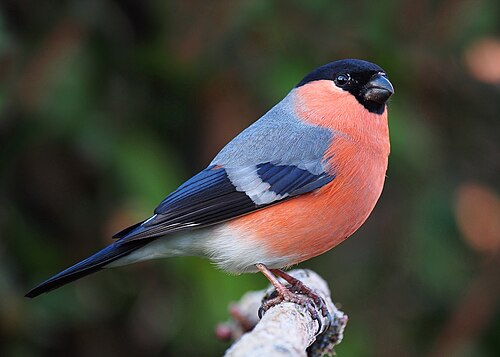
Eurasian Bullfinch
Pyrrhula pyrrhula

Red Crossbill
Loxia curvirostra

Great Tit
Parus major

Eurasian Blackbird
Turdus merula

European Robin
Erithacus rubecula

Eurasian Nuthatch
Sitta europaea
Global Distribution
Where this species is recorded worldwide. Restricted to human observations from 2019 onwards — the same kind of record and the same period the probabilities on this page are built from, so collar-tracking studies, camera-trap arrays and museum specimens are excluded. Around Santa Rosa that removes 5,924 GPS fixes from a handful of tagged jaguars.
where this species is recorded (GBIF density — it tracks where observers go, not how likely a sighting is) · parks where it occurs — tap a pin for the sighting probability there
Parks Where Found
| # | Park | Country | Daily sighting probability |
|---|---|---|---|
| 1 | Sierra Nevada National Park | 🇪🇸 Spain | |
| 2 | Monfragüe National Park | 🇪🇸 Spain | |
| 3 | Ecrins National Park | 🇫🇷 France | |
| 4 | Sierra de Guadarrama National Park | 🇪🇸 Spain | |
| 5 | Picos de Europa National Park | 🇪🇸 Spain | |
| 6 | Cévennes National Park | 🇫🇷 France | |
| 7 | Doñana National Park | 🇪🇸 Spain | |
| 8 | Pyrénées National Park | 🇫🇷 France | |
| 9 | Aigüestortes National Park | 🇪🇸 Spain | |
| 10 | Mercantour National Park | 🇫🇷 France | |
| 11 | Białowieża National Park | 🇵🇱 Poland | |
| 12 | Vanoise National Park | 🇫🇷 France | |
| 13 | Ordesa y Monte Perdido National Park | 🇪🇸 Spain | |
| 14 | Plitvice Lakes National Park | 🇭🇷 Croatia | |
| 15 | Hohe Tauern National Park | 🇦🇹 Austria | |
| 16 | Fertő-Hanság National Park | 🇭🇺 Hungary | |
| 17 | Triglav National Park | 🇸🇮 Slovenia | |
| 18 | Biebrza National Park | 🇵🇱 Poland | |
| 19 | Tatra National Park | 🇸🇰 Slovakia | |
| 20 | Hortobágy National Park | 🇭🇺 Hungary | |
| 21 | Kiskunság National Park | 🇭🇺 Hungary | |
| 22 | Bavarian Forest National Park | 🇩🇪 Germany | |
| 23 | Camargue | 🇫🇷 France | |
| 24 | Gauja National Park | 🇱🇻 Latvia | |
| 25 | Wadden Sea National Park | 🇩🇪 Germany |
Quick answers
What are the chances of seeing a European Serin in Plitvice Lakes National Park?
About 20% of wildlife watchers report a European Serin sighting in Plitvice Lakes National Park, based on 48 verified sightings from GBIF citizen-science data.
When is the best time to see European Serin in Plitvice Lakes National Park?
April has the highest sighting rate for European Serin in Plitvice Lakes National Park in our monthly data.