


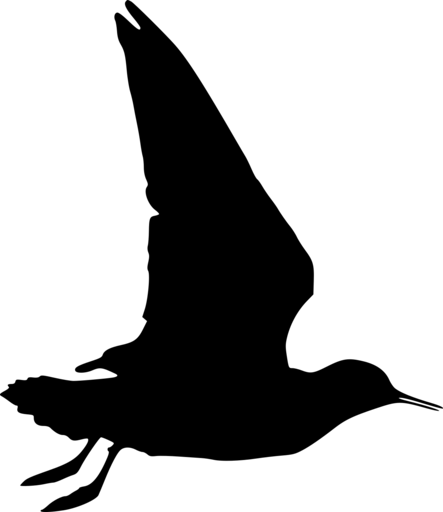
Wilson's Phalarope
Phalaropus tricolor
Silhouette: Oscar G. Miranda · PhyloPic
- KingdomAnimalia (Animals)
- PhylumChordata (Chordates)
- ClassAves (Birds)
- OrderCharadriiformes (Shorebirds and Allies)
- FamilyScolopacidae (Sandpipers and Allies)
- GenusPhalaropus (Phalaropes)
- SpeciesPhalaropus tricolor (Wilson's Phalarope)
About the Wilson's Phalarope
Wilson's phalarope (Phalaropus tricolor) is a small wader. This bird, the largest of the phalaropes, breeds in the prairies of North America in western Canada and the western United States. It is migratory, wintering in inland salt lakes near the Andes in Argentina. They are passage migrants through Central America around March/April and again during September/October. The species is a rare vagrant to western Europe.
This species is often very tame and approachable. Sometimes it is placed in a monotypic genus Steganopus. This bird is named after Scottish-American ornithologist Alexander Wilson. The English and genus names for phalaropes come through French phalarope and scientific Latin Phalaropus from Ancient Greek phalaris, "coot", and pous, "foot". Coots and phalaropes both have lobed toes. The specific tricolor is from Latin tri-, "three-", and color, coloris "colour".
Wilson's phalarope is slightly larger than the red phalarope at about 23 cm (9.1 in) in length. It is a dainty shorebird with lobed toes and a straight fine black bill. The breeding female is predominantly grey and brown above, with white underparts, a reddish neck and reddish flank... Wikipedia →
Recent sightings of Wilson's Phalarope in Rocky Mountain National Park
LIVEiNaturalistClosest Relatives at Rocky Mountain National Park

 Red-necked Phalarope
Phalaropus lobatus

 Spotted Sandpiper
Actitis macularius

 Wilson's Snipe
Gallinago delicata

 Solitary Sandpiper
Tringa solitaria

 Willet
Tringa semipalmata

 Baird's Sandpiper
Calidris bairdii

 Greater Yellowlegs
Tringa melanoleuca

 Marbled Godwit
Limosa fedoa

Lesser Yellowlegs
Tringa flavipes

 Least Sandpiper
Calidris minutilla

 Long-billed Dowitcher
Limnodromus scolopaceus

Semipalmated Sandpiper
Calidris pusilla
Global Distribution
Warmer areas are where this animal is recorded most often.
Parks Where Found
Quick answers
What are the chances of seeing a Wilson's Phalarope in Rocky Mountain National Park?
Under 5% of wildlife watchers report a Wilson's Phalarope sighting in Rocky Mountain National Park, based on 7 verified sightings from GBIF citizen-science data.
When is the best time to see Wilson's Phalarope in Rocky Mountain National Park?
May has the highest sighting rate for Wilson's Phalarope in Rocky Mountain National Park in our monthly data.